Affichage des archives de jeudi, 18 mai 2017
Choisissez l'archive désirée
Rapports
Activité solaire
Activité aurorale
Failed storm prediction, Next coronal hole
The NOAA SWPC had a moderate G2 geomagnetic storm watch in effect during the past few days but we unfortunately haven't even reached the minor G1 geomagnetic storm level. The G2 geomagnetic storm watch from the NOAA Space Weather Prediction Center was a result of a possible coronal mass ejection (CME) impact, something we indeed never mentioned on the site or on our social media pages. We did not believe this solar storm had an earth-bound component so choose to not mention it, a strategy that proved to be the right one. A minor G1 geomagnetic storm was however predicted due to a coronal hole solar wind stream but the stream was weaker than expected and only caused active geomagnetic conditions (Kp4) on 15 May. We are however getting another chance to reach geomagnetic storm levels thanks to yet another coronal hole.
Dernières nouvelles

Complex sunspot region 4366
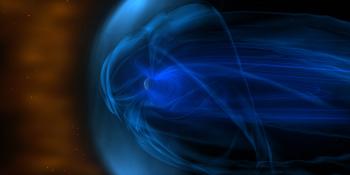
CME impact! S4 solar radiation storm

X1.9 solar flare with earth-directed CME
Forum
Aidez SpaceWeatherLive.com !
De nombreuses personnes consultent SpaceWeatherLive pour suivre l'activité solaire ou observer les aurores boréales, mais l'augmentation du trafic engendre des coûts plus élevés pour maintenir les serveurs en ligne. Si vous appréciez SpaceWeatherLive et souhaitez soutenir le projet, vous pouvez vous abonner pour un site sans publicité ou faire un don. Grâce à votre aide, SpaceWeatherLive restera accessible !



La Météo Spatiale en faits
| Dernière classe X | 04/02/2026 | X4.21 |
| Dernière classe M | 25/02/2026 | M2.4 |
| Dernier orage géomagnétique | 03/03/2026 | Kp5 (G1) |
| Jours sans taches solaires | |
|---|---|
| 365 derniers jours | 3 jours |
| 2026 | 3 jours (4%) |
| Dernier jour sans taches solaires | 24/02/2026 |
| Nombre mensuel moyen de taches solaires | |
|---|---|
| février 2026 | 78.2 -34.3 |
| mars 2026 | 81.7 +3.5 |
| 30 derniers jours | 56.6 -72.2 |