Vaata neljapäev, 25 juuni 2015 arhiivi
Valige soovitud arhiiviüksus
Aruanded
Päikese aktiivsus
Virmaliste aktiivsus
M7.9 solar flare
Yesterday's coronal mass ejection arrival (CME) has been largely disappointing and it took a while before the direction of the IMF turned southward. While we did reach the moderate G2 geomagnetic storming threshold earlier today, we can conclude that this event nonetheless was a disappointment as the expected G3 geomagnetic storming threshold was never within reach. To make matters worse, this night we came to the conclusion that sunspot region 2371 is in decay and that it is now only a shadow of it former self. It's delta structure is no longer there as it has ripped loose from the trailing sunspot cluster. The chance for even a low-level M-class solar flare seemed low. But boy, sunspot region 2371 showed us this morning that it doesn't even need a delta structure to produce a strong solar flare. It surprised us with an M7.9 (R2-moderate) solar flare that peaked at 08:16 UTC.
Viimane uudis

M2.7 solar flare, CME arrival possible
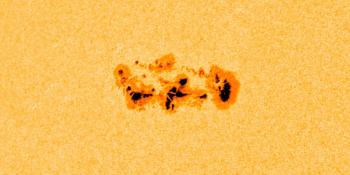
Complex sunspot region 4366

CME impact! S4 solar radiation storm
Viimane foorumi postitus
Toeta SpaceWeatherLive.com-i!
Paljud inimesed tulevad SpaceWeatherLive veebilehele jälgima päikese aktiivsust või kui on võimalus näha virmalisi. Kuid suurema võrguliiklusega kaasnevad ka serverite suuremad võrgus hoidmise kulud. Kui teile meeldib SpaceWeatherLive ja soovite projekti toetada, saate valida reklaamivaba tellimuse või kaaluda annetamist. Teie abiga saame SpaceWeatherLive'i võrgus hoida!



Fakte kosmose ilmast
| Viimane X-loide | 04/02/2026 | X4.21 |
| Viimane M-loide | 18/03/2026 | M2.7 |
| Viimane geomagnetiline torm | 22/03/2026 | Kp7- (G3) |
| Plekivabasid päevi | |
|---|---|
| Viimased 365 päeva | 3 päeva |
| 2026 | 3 päeva (4%) |
| Viimane päikese plekivaba päev | 24/02/2026 |
| Kuu keskmine päikeseplekkide arv | |
|---|---|
| veebruar 2026 | 78.2 -34.3 |
| märts 2026 | 77 -1.2 |
| Viimased 30 päeva | 68.9 -24 |