Affichage des archives de samedi, 2 décembre 2023
Choisissez l'archive désirée
Rapports
Activité solaire
Activité aurorale
Coronal hole faces Earth
The geomagnetic storm which was the result of a coronal mass ejection impact from the M9.8 solar flare has now subsided. The north-south (Bz) component of the interplanetary magnetic field is pointing northwards which is preventing any kind of geomagnetic unrest at the moment. We did peak at the strong G3 geomagnetic storm level which caused some very nice auroral displays at lower latitudes than usual. So does that mean we need to wait for weeks and weeks before the next geomagnetic storm? No! A very large coronal hole is currently facing our planet sending a high-speed solar wind stream towards us.
Dernières nouvelles

M2.7 solar flare, CME arrival possible
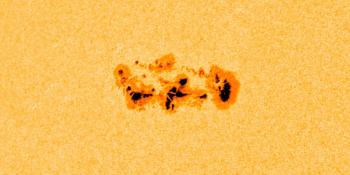
Complex sunspot region 4366

CME impact! S4 solar radiation storm
Forum
Aidez SpaceWeatherLive.com !
De nombreuses personnes consultent SpaceWeatherLive pour suivre l'activité solaire ou observer les aurores boréales, mais l'augmentation du trafic engendre des coûts plus élevés pour maintenir les serveurs en ligne. Si vous appréciez SpaceWeatherLive et souhaitez soutenir le projet, vous pouvez vous abonner pour un site sans publicité ou faire un don. Grâce à votre aide, SpaceWeatherLive restera accessible !



La Météo Spatiale en faits
| Dernière classe X | 04/02/2026 | X4.21 |
| Dernière classe M | 26/03/2026 | M4.0 |
| Dernier orage géomagnétique | 25/03/2026 | Kp5+ (G1) |
| Jours sans taches solaires | |
|---|---|
| 365 derniers jours | 3 jours |
| 2026 | 3 jours (4%) |
| Dernier jour sans taches solaires | 24/02/2026 |
| Nombre mensuel moyen de taches solaires | |
|---|---|
| février 2026 | 78.2 -34.3 |
| mars 2026 | 80.2 +2 |
| 30 derniers jours | 77.8 -4.5 |