Przeglądasz Archiwum z sobota, 25 października 2014
Wybierz potrzebny element z archiwum
Raporty
Aktywność słoneczna
Aktywność zorzowa
X1.0 solar flare from sunspot region 2192
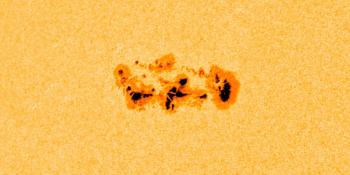
Sunspot region 2192 did it again! Less than 24 hours after the major X3.19 solar flare from yesterday, it now produced a major X1.04 (R3-strong radio blackout) solar flare at 17:08 UTC. This was already it's fourth X-class solar flare but again it looks like it did not launch a coronal mass ejection.
Evolution of sunspot region 2192
Solar activity has been low since yesterday's X3.19 solar flare which did not release a coronal mass ejection. The strongest solar flares today have been two C9 class solar flares. Sunspot region 2192 decayed slightly but it's largest delta spot near the large trailer spot continued to strengthen. We will take a look at it in this article. Sunspot region 2192 remains however one of the largest sunspot regions in modern times and it is so large that it can be seen by the naked eye. Our header image comes from Simon Toogood who captured this image of the Sun that shows large sunspot region 2192 in all it's glory. The setting Sun was dimmed so much by dense haze over Australia that he could capture this cracking shot. Do note that you should never look at the sun without proper eye-protection or through unfiltered optics. Even when dimmed, the Sun can still cause serious eye damage when directly viewed trough a lens.
Najnowsze wiadomości

M2.7 solar flare, CME arrival possible
Complex sunspot region 4366

CME impact! S4 solar radiation storm
Najnowsze wiadomości z forum
Wesprzyj SpaceWeatherLive.com!
Wiele ludzi odwiedza stronę SpaceWeatherLive, aby śledzić aktywność słońca lub czy jest szansa na zobaczenie zorzy, ale większy ruch powoduje większe koszty utrzymania serwerów. Jeżeli podoba ci się strona SpaceWeatherLive i chciałbyś/chciałabyś wesprzeć ten projekt to możesz kupić subskrypcje aby uzyskać dostęp do strony bez reklam lub kupić darowiznę. Dzięki waszej pomocy, pomagacie utrzymać serwery SpaceWeatherLive!



Fakty na temat pogody kosmicznej
| Ostatnie rozbłyski klasy X | 2026/02/04 | X4.21 |
| Ostatnie rozbłyski klasy M | 2026/03/18 | M2.7 |
| Ostatnia burza geomagnetyczna | 2026/03/23 | Kp5 (G1) |
| Dni bez plam słonecznych | |
|---|---|
| Ostatnie 365 dni | 3 Dni |
| 2026 | 3 Dni (4%) |
| Ostatni dzień bez plamy słonecznej | 2026/02/24 |
| Średnia miesięczna liczba plam słonecznych | |
|---|---|
| lutego 2026 | 78.2 -34.3 |
| marca 2026 | 77.7 -0.5 |
| Ostatnie 30 dni | 72.3 -15.7 |