Archiv von Donnerstag, 11 September 2014 anzeigen
Wählen Sie den gewünschten Archiv-Artikel
Berichte
Sonnenaktivität
Polarlichtaktivität
M2.1 and M1.4 solar flares from a sunspot region behind the limb
We are still excited following yesterday's X-class solar flare from sunspot region 2158 but there is another sunspot region that is demanding our attention: a new sunspot region on the eastern limb produced an M2.13 (R1-minor radio blackout) solar flare that peaked at 15:26 UTC and just now an impulsive M1.41 (R1-minor radio blackout) solar flare that peaked at 21:26 UTC. Image: the M2.1 solar flare as seen by NASA SDO.
Middle Latitude Auroral Activity Watch - 12 and 13 September 2014
Yesterday was an exciting day on the Sun. Sunspot region 2158 produced a long duration X1.6 (R3-strong) solar flare while directly facing Earth. Solar imagery suggested at the time that there could be a major Coronal Mass Ejection associated with the event. Now that we have coronagraph imagery from SOHO/LASCO we can conclude that she didn't disappoint.
Neueste Nachrichten
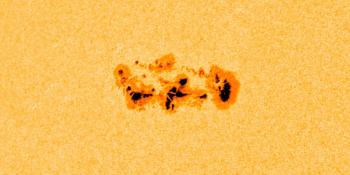
Complex sunspot region 4366

CME impact! S4 solar radiation storm

X1.9 solar flare with earth-directed CME
Neue Nachrichten im Forum
Unterstützen Sie SpaceWeatherLive!
Viele Menschen nutzen SpaceWeatherLive, um die Sonnenaktivität zu verfolgen oder um zu schauen, ob es eine Chance gibt Polarlichter, zu sehen. Mit zunehmendem Datenverkehr steigen jedoch die Kosten für die Serververfügbarkeit. Wenn Ihnen SpaceWeatherLive gefällt und Sie das Projekt unterstützen möchten, können Sie ein Abonnement für eine werbefreie Website abschließen oder eine Spende tätigen. Mit Ihrer Hilfe können wir SpaceWeatherLive online halten!



Weltraumwetter-Fakten
| Letzte Klasse X-Eruption | 04/02/2026 | X4.21 |
| Letzte Klasse M-Eruption | 25/02/2026 | M2.4 |
| Letzter geomagnetischer Sturm | 22/02/2026 | Kp5+ (G1) |
| Tage ohne Flecken | |
|---|---|
| Letzte 365 Tage | 3 Tage |
| 2026 | 3 Tage (5%) |
| Letzter fleckenlose Tag | 24/02/2026 |
| Monatliche mittlere Sonnenfleckenzahl | |
|---|---|
| Januar 2026 | 112.6 -11.4 |
| März 2026 | 83.5 -29.1 |
| Letzte 30 Tage | 67.7 -52.1 |