Vorhersage Details
Ausgestellt: 2026 Jul 21 1230 UTC
Erstellt von NOAA, Space Weather Prediction Center und verarbeitet SpaceWeatherLive.com
Sonnenaktivität
24h Zusammenfassung
Solar activity reached moderate levels as Region 4493 (N05E01, Dkc/beta-gamma-delta) produced an M2.5 at 20/1436 UTC, an M1.1 at 20/1920 UTC, and an M3.4 flare at 20/2225 UTC along with numerous C-class flares. Region 4492 (N15E52, Dko/beta-gamma) was only responsible for low level C-class flaring. Region 4493 underwent rapid flux emergence and developed several delta magnetic configurations. Slight growth was observed in Region 4492, but was relatively stable. No Earth-directed CMEs were observed.Vorhersage
Solar activity is expected to be low with further M-class flares (R1-R2, Minor-Moderate) likely on 21-23 Jul primarily due to the flare potential of AR 4493.Energiereiche Teilchen
24h Zusammenfassung
The greater than 2 MeV electron flux reached high levels this period with a peak flux of 1,300 pfu at 20/1730 UTC. The greater than 10 MeV proton flux was steady at background levels.Vorhersage
The greater than 2 MeV electron flux is expected to return to normal to moderate levels on 21 July with a chance to reach high levels once again by late on 22 July and continuing into 23 July. The greater than 10 MeV proton flux is expected to continue at background levels through 23 Jul with a 5% chance for an S1 or greater event primarily due to the flare potential of AR 4493.Sonnenwind
24h Zusammenfassung
Solar wind parameters became enhanced after 20/2245 UTC, likely indicative of a CIR preceding a negative polarity CH HSS. Solar wind speed increased from approximately 275 km/s to near 425 km/s. Total field increased to 14 nT by 21/0718 UTC with the Bz component ranging from +/-12 nT. Phi angle shifted from positive into a negative sector at 21/0407 UTC.Vorhersage
CIR effects are expected to continue through mid to late on 21 Jul and transition into a negative polarity CH HSS. Solar wind speeds reaching 700 km/s are likely based on recurrence. HSS conditions are expected to continue through 23 Jul before gradually diminishing.Geospace
24h Zusammenfassung
The geomagnetic field was quiet to active due to CIR onset.Vorhersage
Unsettled to active conditions are expected through the latter half of the UTC day on 21 Jul with a chance for G1 (Minor) storming. G1 Storming is likely through early to midday on 22 Jul as HSS conditions increase. Unsettled to active conditions are expected on 23 July as HSS effects persist.Neueste Nachrichten
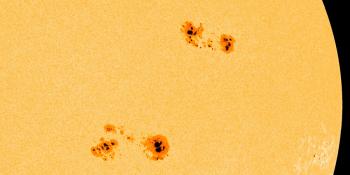
Mittwoch, 1 Juli 2026
X1.1 solar flare, G2 watch
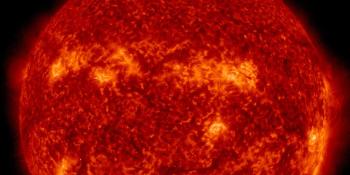
Donnerstag, 4 Juni 2026
G3 geomagnetic storm watch for 4 and 5 June
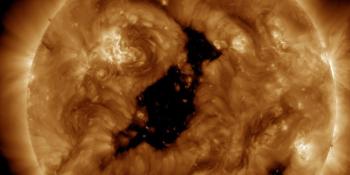
Mittwoch, 13 Mai 2026
Coronal hole faces Earth
Neue Nachrichten im Forum
Coronal holes 139Dark aurora (channel)? 3AR4493 43Filaments and prominences 592Current Farside Activity 725
Weitere Nachrichten im ForumUnterstützen Sie SpaceWeatherLive!
Viele Menschen nutzen SpaceWeatherLive, um die Sonnenaktivität zu verfolgen oder um zu schauen, ob es eine Chance gibt Polarlichter, zu sehen. Mit zunehmendem Datenverkehr steigen jedoch die Kosten für die Serververfügbarkeit. Wenn Ihnen SpaceWeatherLive gefällt und Sie das Projekt unterstützen möchten, können Sie ein Abonnement für eine werbefreie Website abschließen oder eine Spende tätigen. Mit Ihrer Hilfe können wir SpaceWeatherLive online halten!



Weltraumwetter-Fakten
| Letzte Klasse X-Eruption | 04/07/2026 | X1.3 |
| Letzte Klasse M-Eruption | 20/07/2026 | M3.4 |
| Letzter geomagnetischer Sturm | 04/07/2026 | Kp7+ (G3) |
| Tage ohne Flecken | |
|---|---|
| Letzte 365 Tage | 3 Tage |
| 2026 | 3 Tage (1%) |
| Letzter fleckenlose Tag | 24/02/2026 |
| Monatliche mittlere Sonnenfleckenzahl | |
|---|---|
| Juni 2026 | 94.4 -7.1 |
| Juli 2026 | 70.7 -23.7 |
| Letzte 30 Tage | 85.8 -20.7 |
An diesem Tag in der Vergangenheit*
Aurora on this day in history
No observations submitted for this day in history. If you've observed the aurora and you have some amazing photos to show off, submit your observations now!
Submit your aurora observation