Archiv von Montag, 16 März 2015 anzeigen
Wählen Sie den gewünschten Archiv-Artikel
Berichte
Sonnenaktivität
Polarlichtaktivität
C9 solar flare, sunspot region 2297, CME arrival?
A long duration C9 solar flare took place yesterday morning near sunspot region 2297 and launched a partial halo coronal mass ejection into space. While it is not a full halo coronal mass ejection, the coronal mass ejection was nonetheless very wide and caused an increase in the protons and electrons at Earth meaning that this coronal mass ejection will likely arrive at Earth. Based on the ejecta speed, the coronal mass ejection could arrive during the UTC evening hours of 17 March and cause a minor G1 geomagnetic storm.
Neueste Nachrichten

X1.5 solar flare

M2.7 solar flare, CME arrival possible
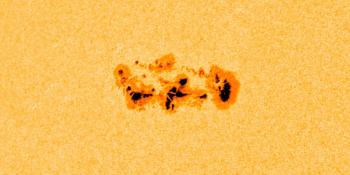
Complex sunspot region 4366
Neue Nachrichten im Forum
Unterstützen Sie SpaceWeatherLive!
Viele Menschen nutzen SpaceWeatherLive, um die Sonnenaktivität zu verfolgen oder um zu schauen, ob es eine Chance gibt Polarlichter, zu sehen. Mit zunehmendem Datenverkehr steigen jedoch die Kosten für die Serververfügbarkeit. Wenn Ihnen SpaceWeatherLive gefällt und Sie das Projekt unterstützen möchten, können Sie ein Abonnement für eine werbefreie Website abschließen oder eine Spende tätigen. Mit Ihrer Hilfe können wir SpaceWeatherLive online halten!



Weltraumwetter-Fakten
| Letzte Klasse X-Eruption | 30/03/2026 | X1.5 |
| Letzte Klasse M-Eruption | 04/04/2026 | M1.0 |
| Letzter geomagnetischer Sturm | 03/04/2026 | Kp7- (G3) |
| Tage ohne Flecken | |
|---|---|
| Letzte 365 Tage | 3 Tage |
| 2026 | 3 Tage (3%) |
| Letzter fleckenlose Tag | 24/02/2026 |
| Monatliche mittlere Sonnenfleckenzahl | |
|---|---|
| März 2026 | 85.9 +7.7 |
| April 2026 | 128.3 +42.3 |
| Letzte 30 Tage | 98.2 +38.5 |