Predicción de 3 días
Emitido: 2026 May 12 0030 UTC
Preparado por el U.S. Dept. of Commerce, NOAA, Space Weather Prediction Center y procesado por SpaceWeatherLive.com
A. NOAA Actividad Geomagnética Observación y Predicción
El mayor indice Kp observado en las últimas 24 horas fue 2 (debajo de los niveles de escala NOAA).
El mayor esperado en 3 hr Kp para May 12-May 14 2026 es 3 (.67debajo de los niveles de escala NOAA).
Desglose índice NOAA Kp
             May 12       May 13       May 14
00-03UT       3.00         3.33         3.00
03-06UT       2.00         3.33         3.00
06-09UT       2.00         2.00         2.33
09-12UT       2.67         3.00         2.00
12-15UT       2.67         3.00         1.67
15-18UT       2.67         2.00         2.00
18-21UT       2.67         3.67         2.67
21-00UT       3.67         3.33         2.67
Razón
No G1 (Minor) o mayores geomagnetic storms are expected. No significant transient or recurrent solar wind features are forecast.B. NOAA Radiación Solar Observación y Predicción
La radiación solar, según lo observado por NOAA GOES-19 en las últimas 24 horas, estuvo por debajo de los umbrales del nivel S en la escala de tormenta.
Tormenta de Radiación Solar Prevista para May 12-May 14 2026
              May 12  May 13  May 14
S1 o mayores   10%      5%      5%
Razón
There is a slight chance for S1 (Minor) o mayores solar radiation storms on 12 May due to the potential from Region 4432.C. NOAA Desvanecimiento Radio Actividad y Predicción
No fueron observados desvanecimientos de radio en las últimas 24 horas.
Predicción Desvanecimiento Radio para May 12-May 14 2026
              May 12        May 13        May 14
R1-R2           45%           45%           45%
R3 o mayores   10%            5%            5%
Razón
There is a chance for R1-R2 (Minor-Moderate) radio blackouts through 14 May. A slight chance exists for an R3 (Strong) o mayores radio blackout on 12 May. All mostly due to the complexity of Regions 4432 and 4436.Últimas noticias

X1.5 solar flare

M2.7 solar flare, CME arrival possible
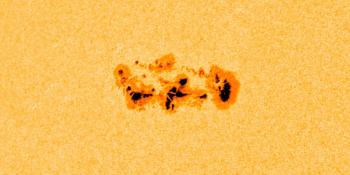
Complex sunspot region 4366
Últimos mensajes del foro
Más temasApoye a SpaceWeatherLive.com!
A lot of people come to SpaceWeatherLive to follow the Solar activity or if there is a chance to see the aurora, but with more traffic comes higher costs to keep the servers online. If you like SpaceWeatherLive and want to support the project you can choose a subscription for an ad-free site or consider a donation. With your help we can keep SpaceWeatherLive online!



Hechos clima espacial
| Último evento clase X | 24/04/2026 | X2.5 |
| Último evento clase M | 10/05/2026 | M5.7 |
| Últimas tormentas geomagnéticas | 05/05/2026 | Kp5 (G1) |
| Días sin manchas | |
|---|---|
| Last 365 days | 3 días |
| 2026 | 3 días (2%) |
| Último día sin manchas | 24/02/2026 |
| Promedio de manchas solares mensuales | |
|---|---|
| abril 2026 | 79.3 -6.6 |
| mayo 2026 | 107.2 +27.9 |
| Last 30 days | 95.2 -0.7 |