Affichage des archives de samedi, 18 mai 2024
Bulletin quotidien sur l'activité solaire et géomagnétique du SIDC
Publié: 2024 May 18 1233 UTC
Prévisions SIDC
Éruptions solaires
M-class flares expected (probability >=50%)
Géomagnétisme
Active conditions expected (A>=20 or K=4)
Moniteur de Flux de Proton
Quiet
| Flux de 10 cm | Ap | |
|---|---|---|
| 18 May 2024 | 215 | 013 |
| 19 May 2024 | 210 | 009 |
| 20 May 2024 | 208 | 006 |
Régions solaires actives et éruptions solaires
Solar flaring activity was high during the last 24 hours, with an M7 flare emitted from NOAA Active Region (AR) 3685 (magnetic configuration Beta-Gamma, Catania sunspot group 9) yesterday at 21:08 UTC. The second brightest X-ray flare of the past 24 hours was a C7 from NOAA AR 3679 (magnetic configuration Beta-Gamma, Catania sunspot group 6). NOAA AR 3671 (magnetic configuration Beta, Catania sunspot group 93) and NOAA AR 3686 (magnetic configuration Alpha, Catania sunspot group 11) produced the remaining of the C-class flaring activity. For the next 24 hours, the pair of NOAA AR 3685 and 3686 is expected to continue producing M-class flares with a chance of an X-class flare.
Éjection de masse coronale
No Earth directed Coronal Mass Ejections (CME) have been observed in the available coronagraph data. A partial halo CME seen in SOHO/LASCO-C2 images as launched yesterday at 12:48 UT is judged to be a back-sided event.
Vent solaire
The Solar Wind (SW) conditions were disturbed by a Coronal Mass Ejection (CME)-induced shock yesterday at 12:40 UTC. The CME itself followed a few minutes later. This is most likely the CME expected to arrive as glancing blow yesterday evening. The SW speed peaked to 520 km/s because of the arrival of the disturbance. The total interplanetary magnetic field (Bt) increased to 17 nT but has decline significantly now. The North-South magnetic component (Bz) fluctuated between -15 and 13 nT during the CME disturbance. The interplanetary magnetic field phi angle turned to the direction of the Sun as a result of the CME arrival and stayed predominantly to this direction. The effects of the CME are expected to diminish in the next 24 hours.
Géomagnétisme
The global geomagnetic conditions reached storm levels yesterday (NOAA Kp: 5 15:00-18:00 UTC, 6 18:00-21:00 UTC, 5+ 21:00-24:00 UTC) and now fluctuate between quiet and unsettled levels. Locally the conditions also increased to the minor storm level (K BEL 5) yesterday at 18:00-21:00 UTC and now fluctuate between quiet and unsettled levels. For the next 24 hours the geomagnetic conditions are expected to vary between active and quiet levels both globally and locally.
Niveaux de flux de protons
The greater than 10 MeV proton flux, as measured by the GOES-18 satellite, continued its drop during the past 24 hours and is now in low levels. It is likely that it will remain at low levels in the next 24 hours, however, there is a small chance of a new proton event and an increase in flux above the 10 pfu alert level.
Flux d'électrons sur l'orbite géostationnaire
The greater than 2 MeV electron flux, as measured by the GOES-18 satellite, increased during the past 24 hours and reached the 1000 pfu alert threshold momentarily. This was most likely a localised event as it lasted for a very short time and was not observed by GOES-16. Hence, the electron flux is expected to remain at low levels in the next 24 hours. The 24h electron fluence increased but remained at normal levels during the past 24 hours. It is expected to decrease further in the next 24 hours.
Estimation du nombre international de taches solaires (ISN) pour aujourd'hui : 167, sur la base de 12 stations.Indices solaires pour 17 May 2024
| Nombre de Wolf, observé par Catania | 193 |
| Flux solaire à 10 cm | 204 |
| AK Chambon La Forêt | 037 |
| AK Wingst | 031 |
| Ap estimé | 028 |
| Nombre international de taches solaires estimé | 181 - Basé sur 22 stations |
Résumé des événements marquants
| Jour | Commencer | Max | Fin | Loc | Force | OP | 10cm | Catania/NOAA | Types de sursaut radio |
|---|---|---|---|---|---|---|---|---|---|
| 17 | 2033 | 2108 | 2126 | S12E62 | M7.2 | 2B | 09/3685 | II/2IV/2 |
Données fournies par le Solar Influences Data analysis Center© - SIDC - Traité par SpaceWeatherLive
Toutes les heures sont indiquées en UTC
Dernières nouvelles

Happy New Year! Celebrate with an M7.1 solar flare!
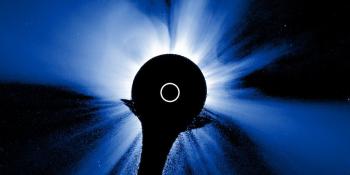
M8.1 solar flare with earth-directed CME
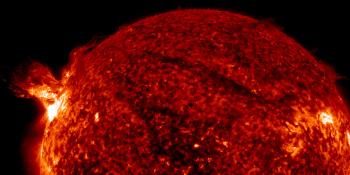
X1.9 solar flare, Coronal hole faces Earth
Forum
Aidez SpaceWeatherLive.com !
A lot of people come to SpaceWeatherLive to follow the Solar activity or if there is a chance to see the aurora, but with more traffic comes higher costs to keep the servers online. If you like SpaceWeatherLive and want to support the project you can choose a subscription for an ad-free site or consider a donation. With your help we can keep SpaceWeatherLive online!



La Météo Spatiale en faits
| Dernière classe X | 08/12/2025 | X1.1 |
| Dernière classe M | 31/12/2025 | M7.11 |
| Dernier orage géomagnétique | 02/01/2026 | Kp5 (G1) |
| Jours sans taches solaires | |
|---|---|
| Dernier jour sans taches solaires | 08/06/2022 |
| Nombre mensuel moyen de taches solaires | |
|---|---|
| décembre 2025 | 124 +32.2 |
| janvier 2026 | 119.3 -4.8 |
| 30 derniers jours | 108.9 +1.7 |