Visualizzazione archivio di lunedì, 16 marzo AM
Seleziona l'elemento desiderato dell'archivio
Rapporti
Attività solare
Attività aurorale
C9 solar flare, sunspot region 2297, CME arrival?
A long duration C9 solar flare took place yesterday morning near sunspot region 2297 and launched a partial halo coronal mass ejection into space. While it is not a full halo coronal mass ejection, the coronal mass ejection was nonetheless very wide and caused an increase in the protons and electrons at Earth meaning that this coronal mass ejection will likely arrive at Earth. Based on the ejecta speed, the coronal mass ejection could arrive during the UTC evening hours of 17 March and cause a minor G1 geomagnetic storm.
Ultime notizie

X1.5 solar flare

M2.7 solar flare, CME arrival possible
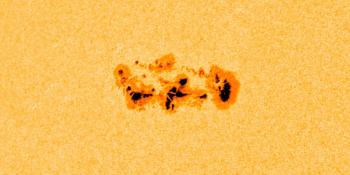
Complex sunspot region 4366
Ultimi messaggi dal forum
Supporta SpaceWeatherLive.com!
A lot of people come to SpaceWeatherLive to follow the Solar activity or if there is a chance to see the aurora, but with more traffic comes higher costs to keep the servers online. If you like SpaceWeatherLive and want to support the project you can choose a subscription for an ad-free site or consider a donation. With your help we can keep SpaceWeatherLive online!



Notizie sul meteo spaziale
| Ultimo brillamento X | 2026/03/30 | X1.5 |
| Ultimo brillamento M | 2026/04/09 | M1.0 |
| Ultima tempesta geomagnetica | 2026/04/18 | Kp6- (G2) |
| Giorni senza macchie | |
|---|---|
| Ultimi 365 giorni | 3 giorni |
| 2026 | 3 giorni (3%) |
| Ultimo giorno senza macchie | 2026/02/24 |
| Media mensile Numero di Macchie Solari | |
|---|---|
| marzo 2026 | 85.9 +7.7 |
| aprile 2026 | 83.6 -2.3 |
| Ultimi 30 giorni | 94.5 +32.8 |