Przeglądasz Archiwum z środa, 18 czerwca 2003
Raport aktywności słonecznej
Każdy wspomniany rozbłysk słoneczny w tym raporcie ma współczynnik skalowania dodany przez Space Weather Prediction Center (SWPC). Przez skale współczynników SWPC, raporty o rozbłyskach słonecznych są o 42% mniejsze niż naukowo jakościowa data. Skale współczynników zostały usunięte z naszych archiwów o rozbłyskach słonecznych by odzwierciedlić prawdziwe jednostki fizyczne.
Raport aktywności słoneczno- geomagnetycznej 2003 Jun 18 2200 UTCPrzygotowane przez NOAA © SWPC i przetworzone przez SpaceWeatherLive.com
Połączenie raportów USAF/NOAA o słonecznej i geofizycznej aktywności
Numer SDF 169 wydany w 2200Z na 18 Jun 2003IA. Analiza aktywności regionów słonecznych i aktywność od 17-2100Z do 18-2100Z Solar activity increased to high levels today. Region
386 (S07E43) produced an M6.8 x-ray flare (correlated using SXI
imagery) at 17/2255Z that had an associated Tenflare (2100 sfu),
Type IV and Type II radio sweeps (an estimated shock velocity of 1000
km/sec). This region showed growth in the magnetic structure
surrounding the dominant lead spot as a delta complex has become
evident since yesterday. The penumbral field coverage has changed
little over the period. Newly numbered Region 387 (N18E62) produced
several minor flares during the interval.
IB. Prognoza aktywności słonecznej
Solar activity is expected to be at
moderate to high levels. Region 386 has the potential to produce an
isolated major flare.
IIA. Podsumowanie aktywności geofizycznej 17-2100Z do 18-2100Z
The geomagnetic field was at predominantly minor to major storm
levels with an isolated period of severe storm conditions seen at
high latitudes between 18/0600 and 0900Z. A co-rotating integrated
region preceding a recurrent high speed coronal hole stream and is
believed to responsible for the storm conditions. The greater than
10 Mev proton flux at geosynchronous orbit reached event threshold
at 18/2050Z and due to the recent activity the exact source for this
particle event is not certain.
IIB. Prognoza aktywności geofizycznej
The geomagnetic field is
expected to be at predominantly active to minor storm levels due to
a recurrent high speed coronal hole stream. Isolated major storm
conditions are possible on day one due to the potential for
transient activity. The greater than 10 MeV proton event should
remain above threshold level through the first day of the interval.
III. Prawdopodobieństwa zdarzenia 19 Jun do 21 Jun
| Klasa M | 60% | 60% | 60% |
| Klasa X | 20% | 20% | 20% |
| Proton | 99% | 50% | 25% |
| PCAF | in progress | ||
IV. Przepływ 10,7 cm z Penticton
  Zaobserwowano       18 Jun 120
  Przewidywane   19 Jun-21 Jun  120/120/120
  Średnia z 90 dni        18 Jun 125
V. Indeks geomagnetyczny A
  Zaobserwowano Afr/Ap 17 Jun  030/050
  Szacowane     Afr/Ap 18 Jun  035/050
  Przewidywane    Afr/Ap 19 Jun-21 Jun  025/035-020/025-020/025
VI. Prawdopodobieństwa aktywności geomagnetycznej 19 Jun do 21 Jun
| A. Średnie szerokości geograficzne | |||
|---|---|---|---|
| Aktywne | 40% | 50% | 50% |
| Słaba burza | 30% | 20% | 20% |
| Bardzo znacząca burza | 15% | 05% | 05% |
| B. Wysokie szerokości geograficzne | |||
|---|---|---|---|
| Aktywne | 40% | 50% | 50% |
| Słaba burza | 40% | 30% | 30% |
| Bardzo znacząca burza | 20% | 10% | 10% |
Wszystkie czasy w UTC
<< Idź do codziennego przeglądu
Najnowsze wiadomości

poniedziałek, 30 marca 2026
X1.5 solar flare

wtorek, 17 marca 2026
M2.7 solar flare, CME arrival possible
niedziela, 1 lutego 2026
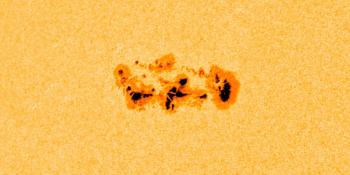
Complex sunspot region 4366
Najnowsze wiadomości z forum
AR4419 65SWPC Display bug or other issues 9Space Weather Memes 826Coronal Holes 42/44 81Filaments and prominences 548
Więcej tematów
Wesprzyj SpaceWeatherLive.com!
Wiele ludzi odwiedza stronę SpaceWeatherLive, aby śledzić aktywność słońca lub czy jest szansa na zobaczenie zorzy, ale większy ruch powoduje większe koszty utrzymania serwerów. Jeżeli podoba ci się strona SpaceWeatherLive i chciałbyś/chciałabyś wesprzeć ten projekt to możesz kupić subskrypcje aby uzyskać dostęp do strony bez reklam lub kupić darowiznę. Dzięki waszej pomocy, pomagacie utrzymać serwery SpaceWeatherLive!



Fakty na temat pogody kosmicznej
| Ostatnie rozbłyski klasy X | 2026/03/30 | X1.5 |
| Ostatnie rozbłyski klasy M | 2026/04/09 | M1.0 |
| Ostatnia burza geomagnetyczna | 2026/04/19 | Kp6- (G2) |
| Dni bez plam słonecznych | |
|---|---|
| Ostatnie 365 dni | 3 Dni |
| 2026 | 3 Dni (3%) |
| Ostatni dzień bez plamy słonecznej | 2026/02/24 |
| Średnia miesięczna liczba plam słonecznych | |
|---|---|
| marca 2026 | 85.9 +7.7 |
| kwietnia 2026 | 81 -4.9 |
| Ostatnie 30 dni | 92.5 +30.9 |
