Просмотр архива за понедельник, 27 февраля 2012
Отчет о солнечной активности
Любая солнечная вспышка, упомянутая в этом расчете, имеет масштабирующий коэффициент, применяемый Центром прогнозирования космической погоды (SWPC). Из-за него солнечные вспышки здесь на 42% слабее, чем в научных данных. Из наших архивов этот коэффициент был удален, чтобы показать реальные величины вспышек.
Отчет о солнечно-геофизической активности 2012 Feb 27 2200 UTCПодготовлено NOAA © SWPC и представлено SpaceWeatherLive.com
Совместный отчет USAF/NOAA о солнечной и геофизической активности
Количество SD 058 на уровне 2200Z 27 Feb 2012IA. Анализ активных солнечных регионов и активности от 26 - 2100Z до 27 - 2100Z Solar activity was low during the past 24 hours. There
was one C-class flare, a C2/Sf at 26/2141Z from the spotless plage
Region 1421 (N14E62). Region 1423 (N18E15) is the largest group on
the disk but is small and unimpressive. A filament eruption was
observed over the north-east limb in the SDO AIA 304 imagery at
about 27/1433Z and appears to be associated with a CME seen in LASCO
imagery over the north pole. Another CME was noted in LASCO at
27/2012Z over the west limb but STEREO-A EUVI images clearly show
that the solar source region behind the west limb. Neither of these
CMEs are expected to be geoeffective.
IB. Прогноз солнечной активности
Solar activity is expected to be very
low. There is, however, a slight chance for an isolated C-class
flare.
IIA. Обзор геофизической активности от 26 - 2100Z до 27 - 2100Z
The geomagnetic field ranged from quiet to minor storm levels with an
isolated period of major storm levels at high latitude. A weak shock
passed the ACE spacecraft at 26/2058Z and was followed by a sudden
impulse at Earth at 26/2141Z. Unsettled to active levels prevailed
for the subsequent nine hours, followed by about nine hours of
mostly quiet levels. However, solar wind data showed a sustained
interval of moderately negative Bz from about 1000-1800Z and
conditions increased to active levels from 1200-2100Z with a minor
storm period during the last three hours of the interval. The timing
and solar wind signatures suggest that disturbance is most likely
due to passage of the CME that was initiated early on 24 February.
The greater than 10 MeV protons continued to be elevated but were on
the decline during the day with end-of-period values less than 1
PFU. Further analysis and comparison with ACE EPAM and ACE SIS show
that these particles were likely also associated with the 24
February CME.
IIB. Прогноз геофизической активности
The geomagnetic field is
expected to be generally unsettled for the first day (28 February)
as effects from the current disturbance persist. Predominantly quiet
levels are expected for the second and third days (29 February - 01
March).
III. Вероятность события от 28 - Feb до 01 - Mar
| M-класс | 01% | 01% | 01% |
| X-класс | 01% | 01% | 01% |
| Протон | 01% | 01% | 01% |
| PCAF | green | ||
IV. Радиоизлучение λ = 10,7см
  Наблюдаемый       27 Feb 106
  Прогнозируемый   28 Feb-01 Mar  105/105/105
  среднее значение за последние 3 месяца        27 Feb 128
V. Геомагнитные индексы
  Наблюдаемый Afr/Ap 26 Feb  007/006
  По оценкам     Afr/Ap 27 Feb  013/016
  Прогнозируемый    Afr/Ap 28 Feb-01 Mar  009/010-006/005-006/005
VI. Вероятность геомагнитной активности с 28 - Feb до 01 - Mar
| A. Средние широты | |||
|---|---|---|---|
| Активно | 20% | 05% | 05% |
| Слабый шторм | 05% | 01% | 01% |
| Большой шторм | 01% | 01% | 01% |
| B. Высокие широты | |||
|---|---|---|---|
| Активно | 15% | 15% | 15% |
| Слабый шторм | 15% | 10% | 10% |
| Большой шторм | 05% | 05% | 05% |
Все время в UTC
<< Перейти на сегодняшнюю страницу обзора
Последние новости
воскресенье, 1 февраля 2026
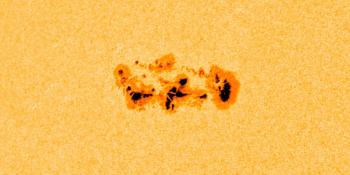
Complex sunspot region 4366

понедельник, 19 января 2026
CME impact! S4 solar radiation storm

воскресенье, 18 января 2026
X1.9 solar flare with earth-directed CME
Последние сообщения с форума
Well… here it goes again.. 27Coronal Hole 26 11Space Weather Memes 800Current Farside Activity 406Filaments and prominences 491
Больше темПоддержка SpaceWeatherLive.com!
A lot of people come to SpaceWeatherLive to follow the Solar activity or if there is a chance to see the aurora, but with more traffic comes higher costs to keep the servers online. If you like SpaceWeatherLive and want to support the project you can choose a subscription for an ad-free site or consider a donation. With your help we can keep SpaceWeatherLive online!



Факты о космической погоде
| Последняя X-вспышка | 04/02/2026 | X4.21 |
| Последняя M-вспышка | 16/02/2026 | M2.4 |
| Последняя геомагнитная буря | 22/02/2026 | Kp5+ (G1) |
| Безупречные дни | |
|---|---|
| Последние 365 дней | 1 День |
| 2026 | 1 День (2%) |
| Текущий отрезок | 2 дней |
| Среднемесячное количество солнечных пятен | |
|---|---|
| января 2026 | 112.6 -11.4 |
| февраля 2026 | 86.1 -26.5 |
| Последние 30 дней | 95.9 -24.7 |