Arşiv Salı, 3 Nisan 2001 görüntüleniyor
Güneş aktivite raporu
Bu raporda bahsedilen herhangi bir güneş lekesi, Uzay Hava Tahmin Merkezi (SWPC) tarafından uygulanan bir ölçekleme faktörüne sahiptir. SWPC ölçekleme faktörü nedeniyle güneş lekeleri, bilimsel kalitedeki verilere göre %42 daha küçük olarak rapor edilmektedir. Ölçekleme faktörü, arşivlenmiş güneş lekesi verilerimizden kaldırılmıştır, bu da gerçek fiziksel birimleri yansıtmaktadır.
Solar-Jeofizik Aktivite Raporu 2001 Apr 03 2200 UTCNOAA © SWPC tarafından hazırlanmış ve SpaceWeatherLive.com tarafından işlenmiştir.
USAF/NOAA Ortak Güneş ve Jeofizik Aktivite Raporu
SDF Numarası 093, 03 Apr 2001 üzerinden 2200Z'de VerildiIA. 02-2100Z'den 03-2100Z'ye Solar Aktif Bölgelerin ve Aktivitenin Analizi Solar activity has been high. Region 9393 (N18W82)
produced a spectacular flare beginning at 02/2132Z, reaching maximum
at 02/2151Z and ending at 02/2203Z: the peak of the event saturated
the GOES-XRS sensors, but was estimated to be X20, the largest
observed so far this solar cycle. A fast coronal mass ejection (CME)
was observed in association with this event. The CME appeared to be
primarily headed off the west limb, but there was a deflection of
material near the north polar region, suggesting that the event
trajectory might have some earthward component. In the LASCO-C3
coronagraph images, this CME was overtaking the previous CME
associated with yesterday's X-class event from the same region.
Region 9393 also produced an M2/2f flare at 1234Z. The leading spots
of 9393 are currently rotating off the solar disk. Newly assigned
region 9415 (S22E72) produced an X1/1n flare at 0357Z. The event was
also associated with a CME which has the signature of a partial halo
event, although the bulk of the material appears to be flowing in a
southeasterly direction. So far Region 9415 is showing three large
penumbral clusters with an area of about 470 millionths. Solar
observers report that additional spots are rotating into view behind
this leading section of the region. Two new regions emerged on the
disk today: Region 9416 (N17W18) and Region 9417 (S10E43). Region
9408 (S08W46) showed some growth during the past 24 hours but was
relatively stable.
IB. Güneş Aktivitesi Tahmini
Solar activity is expected to be high.
Region 9393 will continue to be a threat for major flares and proton
events during the next three days, although the probabilities will
decrease as it rotates around the solar limb. Region 9415 has also
clearly shown major flare potential and is expected to be a source
of M-class flares and probably additional isolated X-class flares.
IIA. Jeofiziksel Aktivite Özeti 02-2100Z ila 03-2100Z
The geomagnetic field ranged from quiet to active levels. Quiet to
unsettled levels prevailed for most of the day, but there was an
active period from 02/2100-2400Z. An energetic proton event resulted
from the X20 flare. Greater than 10 MeV particles exceeded event
threshold at 02/2340Z, and reached a maximum of 1,110 PFU at 0745Z.
The 10 MeV particle event continues in progress with 308 PFU at
forecast issue time. Greater than 100 MeV particles also exceeded
thresholds, beginning at 03/0120Z, reaching maximum of 5.4 PFU at
03/0740Z, The greater than 100 MeV particles dipped below threshold
around 03/1900Z and appeared to be staying below threshold as of
03/2050Z.
IIB. Jeofiziksel Aktivite Tahmini
The geomagnetic field is
expected to increase to minor to major storm levels during the next
24 hours. The two recent CMEs from region 9393 are likely to have
combined by now, and the size and possible partial earthward
component of the 2nd CME create the expectation of some interaction
at Earth. The response is less certain than in the case of a
full-halo CME and probably less dramatic than the result of a
direct, head-on hit. The forecast is for minor storm levels at the
mid-latitudes, with major storm levels at the higher latitudes.
Minor storm conditions are expected to persist through the second
day. Additional activity, most likely reaching active levels, is
possible on the third day due to a glancing blow from the CME from
region 9415. The greater than 10 MeV proton event is expected to
persist through most of tomorrow.
III. Olay Olasılıkları 04 Apr ila 06 Apr
| M Sınıfı | 85% | 80% | 70% |
| X Sınıfı | 35% | 30% | 20% |
| Proton | 99% | 30% | 15% |
| PCAF | in progress | ||
IV. Penticton 10.7 cm Akı
  Gözlemlendi       03 Apr 223
  Tahmin edildi   04 Apr-06 Apr  215/205/195
  90 Günlük Ortalama        03 Apr 166
V. Jeomanyetik A Endeksi
  Gözlemlendi Afr/Ap 02 Apr  012/020
  Tahmini     Afr/Ap 03 Apr  010/012
  Tahmin edildi    Afr/Ap 04 Apr-06 Apr  035/060-035/040-020/020
VI. Jeomanyetik Aktivite Olasılıkları 04 Apr ila 06 Apr
| A. Orta Enlemler | |||
|---|---|---|---|
| Aktif | 35% | 35% | 35% |
| Küçük fırtına | 30% | 30% | 15% |
| Büyük-şiddetli fırtına | 25% | 15% | 10% |
| B. Yüksek Enlemler | |||
|---|---|---|---|
| Aktif | 25% | 25% | 25% |
| Küçük fırtına | 35% | 35% | 20% |
| Büyük-şiddetli fırtına | 35% | 30% | 15% |
UTC'deki tüm zamanlar
<< Günlük genel bakış sayfasına git
Son haberler

Pazartesi, 30 Mart 2026
X1.5 solar flare

Salı, 17 Mart 2026
M2.7 solar flare, CME arrival possible
Pazar, 1 Şubat 2026
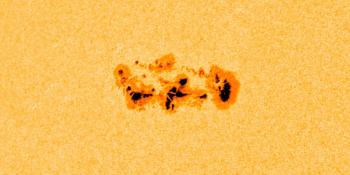
Complex sunspot region 4366
Güncel forum mesajları
Coronal Holes 42/44 86Comet C/2026 A1 (MAPS) for the southern hemisphere 70Current Farside Activity 458AR4419 66SWPC Display bug or other issues 9
Daha fazla konu
SpaceWeatherLive.com'u Destekle!
Birçok insan SpaceWeatherLive'a Güneş aktivitelerini takip etmek ya da aurora görme şansı olup olmadığına bakmak için geliyor, ancak daha fazla trafikle birlikte sunucuları çevrimiçi tutmak da daha yüksek maliyetler gerektiriyor. SpaceWeatherLive'ı beğendiyseniz ve projeyi desteklemek istiyorsanız, reklamsız bir site için abonelik seçebilir veya bağış yapmayı düşünebilirsiniz. Sizin yardımınızla SpaceWeatherLive'ı çevrimiçi tutabiliriz!



Uzay Hava Durumu Gerçekleri
| Son X-patlaması | 2026/03/30 | X1.5 |
| Son M-patlaması | 2026/04/09 | M1.0 |
| Son jeomanyetik fırtına | 2026/04/19 | Kp6- (G2) |
| Lekesiz günler | |
|---|---|
| Son 365 gün | 3 gün |
| 2026 | 3 gün (3%) |
| Son lekesiz gün | 2026/02/24 |
| Aylık ortalama güneş lekesi sayısı | |
|---|---|
| Mart 2026 | 85.9 +7.7 |
| Nisan 2026 | 81 -4.9 |
| Son 30 gün | 94 +31.1 |
