Arşiv Perşembe, 15 Mayıs 2003 görüntüleniyor
Jeofizik raporu
Bu raporda bahsedilen herhangi bir güneş lekesi, Uzay Hava Tahmin Merkezi (SWPC) tarafından uygulanan bir ölçekleme faktörüne sahiptir. SWPC ölçekleme faktörü nedeniyle güneş lekeleri, bilimsel kalitedeki verilere göre %42 daha küçük olarak rapor edilmektedir. Ölçekleme faktörü, arşivlenmiş güneş lekesi verilerimizden kaldırılmıştır, bu da gerçek fiziksel birimleri yansıtmaktadır.
Güneş ve Jeofiziksel Aktivite Özeti Raporları 2003 May 15 0245 UTCNOAA © SWPC tarafından hazırlanmış ve SpaceWeatherLive.com tarafından işlenmiştir.
USAF/NOAA Ortak Güneş ve Jeofiziksel Aktivite Özeti
SGAS Numarası 135, 15 May 2003 üzerinden 0245Z'de verildi Bu rapor, SWO'da 14 May tarihinde alınan verilerden derlenmiştir.A. Enerjik Olaylar
Başlangıç Maksimum Bitiş Bölge Lokasyon Xray Op 245MHz 10cm Tarama
Yok
B. Proton Olayları
Yok.
C. Jeomanyetik Aktivite Özeti
The geomagnetic field has been at
unsettled to minor storm levels due to a favorably positioned
coronal hole. The greater than 2 MeV electron flux at
geosynchronous orbit reached high levels today.
D. Stratosferik Isınma
Yok.
E. Günlük Endeksler: (gerçek zamanlı ön/tahmini değerler)
10 cm 096  SSN 075  Afr/Ap 025/027   X-ray Background B1.0
Günlük Proton Akışı (24 saat boyunca akı birikimi) Raporları
GT 1 MeV 6.8e+06   GT 10 MeV 1.1e+04 p/(cm2-ster-day)
(GOES-10 uydusu eşzamanlı yörüngesi W135 derece)
Günlük Elektron Akışı
GT 2 MeV 7.80e+08 e/(cm2-ster-day)
(GOES-10 uydusu eşzamanlı yörüngesi W135 derece)
3 Saatlik K-endeksleri
Boulder 5 5 5 4 3 3 4 3 Planetary 5 5 5 4 3 4 4 3
F. Yorumlar
  The GOES 10 energetic proton detectors are showing
intermittent, high noise levels in the higher energy proton channels
(greater than about 80 MeV). This problem was first noticed in data
taken April 26, 2003. To ensure continued operational monitoring of
important energetic particle data, it is necessary to reassign
primary/secondary designations for the GOES Space Environment
Monitor (SEM) detectors. Beginning 1500 UT on May 15, GOES-8 will
once again become the primary satellite for protons. GOES 12 will be
the primary satellite for magnetometer, X-ray, and electron
measurements. GOES 10 will be the secondary satellite for all SEM
sensors - magnetometer, X-ray sensor, and energetic particle sensor.
This short-term solution (approximately 2 - 3 months) will be in
place until we define and implement a permanent fix. A more detailed
explanation can be found at: http://www.sec.noaa.gov/GOES.html.
UTC'deki tüm zamanlar
<< Günlük genel bakış sayfasına git
Son haberler

Pazartesi, 30 Mart 2026
X1.5 solar flare

Salı, 17 Mart 2026
M2.7 solar flare, CME arrival possible
Pazar, 1 Şubat 2026
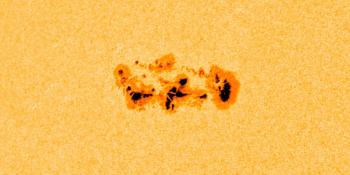
Complex sunspot region 4366
Güncel forum mesajları
Coronal Holes 42/44 83Current Farside Activity 458AR4419 66SWPC Display bug or other issues 9Space Weather Memes 826
Daha fazla konu
SpaceWeatherLive.com'u Destekle!
Birçok insan SpaceWeatherLive'a Güneş aktivitelerini takip etmek ya da aurora görme şansı olup olmadığına bakmak için geliyor, ancak daha fazla trafikle birlikte sunucuları çevrimiçi tutmak da daha yüksek maliyetler gerektiriyor. SpaceWeatherLive'ı beğendiyseniz ve projeyi desteklemek istiyorsanız, reklamsız bir site için abonelik seçebilir veya bağış yapmayı düşünebilirsiniz. Sizin yardımınızla SpaceWeatherLive'ı çevrimiçi tutabiliriz!



Uzay Hava Durumu Gerçekleri
| Son X-patlaması | 2026/03/30 | X1.5 |
| Son M-patlaması | 2026/04/09 | M1.0 |
| Son jeomanyetik fırtına | 2026/04/19 | Kp6- (G2) |
| Lekesiz günler | |
|---|---|
| Son 365 gün | 3 gün |
| 2026 | 3 gün (3%) |
| Son lekesiz gün | 2026/02/24 |
| Aylık ortalama güneş lekesi sayısı | |
|---|---|
| Mart 2026 | 85.9 +7.7 |
| Nisan 2026 | 81 -4.9 |
| Son 30 gün | 92.5 +30.9 |
