Arşiv Cumartesi, 19 Temmuz 2025 görüntüleniyor
SIDC'den güneş ve jeomanyetik aktivite hakkında günlük bülten
Yayınlandı: 2025 Jul 19 1231 UTC
SIDC Tahmini
Güneş patlamaları
C-class flares expected, (probability >=50%)
Jeomanyetizma
Quiet (A<20 and K<4)
Güneş protonları
Quiet
| 10cm akı | Ap | |
|---|---|---|
| 19 Jul 2025 | 156 | 011 |
| 20 Jul 2025 | 150 | 009 |
| 21 Jul 2025 | 140 | 007 |
Güneş Aktif Bölgeleri ve parlama
Solar flaring activity was low over the past 24 hours, with only three C-class flares identified. SIDC Sunspot Group 525 (NOAA Active Region [AR] 4135) produced the brightest flare, SIDC flare 4915 (a C3) on 19 Jul at 09:07 UTC. SIDC Sunspot Group 522 (NOAA AR 4136, Beta-Gamma magnetic configuration) produced the remaining flares, including the double flare SIDC flare 4913 (a C2) at 13:09 on 18 Jul. Further infrequent flaring activity is expected in the next 24 hours.
Koronal Kütle Atılımı
No Earth-directed Coronal Mass Ejections (CME) were observed in the last 24 hours.
Güneş rüzgarı
During the past 24 hours the effects of the High Speed Stream (HSS) that arrived on 11 July subsided and the Solar Wind (SW) conditions are very gradually returning to a slow SW regime. The SW speed varied between 490 and 590 km/s, while the interplanetary magnetic field (B) ranged between 2 and 7 nT. Its North-South component (Bz) fluctuated between -6 and 6 nT. The SW conditions are expected to remain at the same levels in the next 24 hours.
Jeomanyetizma
The global geomagnetic conditions reached active levels (NOAA Kp 4) for the interval of 12:00 to 15:00 UTC on 18 Jul. The rest of the past 24 hours they varied between unsettled and quiet levels (NOAA Kp 1 to 3). The local geomagnetic conditions reached active levels (K BEL 4) for the interval of 12:00 to 18:00 UTC on 18 Jul. The rest of the past 24 hours they were at quiet levels (K BEL 1 to 2). Quiet to unsettled conditions are expected to prevail in the next 24 hours.
Proton akı seviyeleri
The greater than 10 MeV proton flux, as measured by the GOES-19 satellite, was at background levels over the past 24 hours and is expected to remain so in the next 24 hours.
Jeostatik yörüngedeki elektron akıları
The greater than 2 MeV electron flux, as measured by GOES 19, was above the 1000 pfu alert threshold during the past 24 hours. It is expected wane and fluctuate around the threshold level in the next 24 hours. The 24-hour electron fluence was at moderate levels during the past 24 hours and is expected to remain at this level in the next 24 hours.
Bugünün tahmini uluslararası güneş lekesi sayısı (ISN): 1 Tahmini gunes lekesi sayisi, 2 Istasyon sayisi.18 Jul 2025 için güneş endeksleri
| Kurt numarası Catania | 213 |
| 10cm güneş akısı | 156 |
| AK Chambon La Forêt | 023 |
| AK Wingst | 016 |
| Tahmini Ap | 015 |
| Tahmini uluslararası güneş lekesi sayısı | 173 - 27 istasyonlarına göre |
Dikkat çeken olayların özeti
| Gün | Başlamak | Maksimum | Son | Yer | Kuvvet | OP | 10cm | Katanya/NOAA | Radyo patlaması türleri | |
|---|---|---|---|---|---|---|---|---|---|---|
| Yok | ||||||||||
Güneş Etkileri Veri Analiz Merkezi tarafından sağlanmıştır© - SIDC - SpaceWeatherLive tarafından işlendi
UTC'deki tüm zamanlar
<< Günlük genel bakış sayfasına git
Son haberler
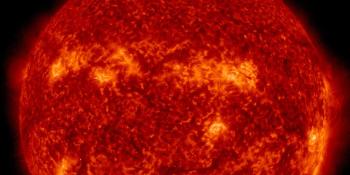
G3 geomagnetic storm watch for 4 and 5 June
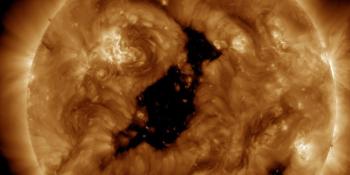
Coronal hole faces Earth

X1.5 solar flare
Güncel forum mesajları
SpaceWeatherLive.com'u Destekle!
Birçok insan SpaceWeatherLive'a Güneş aktivitelerini takip etmek ya da aurora görme şansı olup olmadığına bakmak için geliyor, ancak daha fazla trafikle birlikte sunucuları çevrimiçi tutmak da daha yüksek maliyetler gerektiriyor. SpaceWeatherLive'ı beğendiyseniz ve projeyi desteklemek istiyorsanız, reklamsız bir site için abonelik seçebilir veya bağış yapmayı düşünebilirsiniz. Sizin yardımınızla SpaceWeatherLive'ı çevrimiçi tutabiliriz!



Uzay Hava Durumu Gerçekleri
| Son X-patlaması | 2026/06/03 | X1.0 |
| Son M-patlaması | 2026/06/03 | M7.9 |
| Son jeomanyetik fırtına | 2026/05/16 | Kp6- (G2) |
| Lekesiz günler | |
|---|---|
| Son 365 gün | 3 gün |
| 2026 | 3 gün (2%) |
| Son lekesiz gün | 2026/02/24 |
| Aylık ortalama güneş lekesi sayısı | |
|---|---|
| Nisan 2026 | 79.3 -6.6 |
| Haziran 2026 | 140 +60.7 |
| Son 30 gün | 97 +3.2 |