Arşiv Cumartesi, 31 Ocak 2026 görüntüleniyor
SIDC'den güneş ve jeomanyetik aktivite hakkında günlük bülten
Yayınlandı: 2026 Jan 31 1232 UTC
SIDC Tahmini
Güneş patlamaları
C-class flares expected, (probability >=50%)
Jeomanyetizma
Quiet (A<20 and K<4)
Güneş protonları
Warning condition (activity levels expected to increase, but no numeric forecast given)
| 10cm akı | Ap | |
|---|---|---|
| 31 Jan 2026 | 130 | 005 |
| 01 Feb 2026 | 134 | 005 |
| 02 Feb 2026 | 137 | 005 |
Güneş Aktif Bölgeleri ve parlama
Solar flaring activity was low over the past 24 hours, with only C-class flares identified. A total of 11 numbered sunspot groups were identified on the visible solar disk over the past 24 hours. Most regions have been magnetically simple (classified as magnetic type alpha or beta), except for SIDC Sunspot Group 784 (NOAA Active Region 4366), which has exhibited significant growth and increased the complexity of its underlying magnetic field configuration. The region was responsible for most of flaring activity over the period and is currently classified as magnetic type beta-gamma-delta. The largest recorded flare was a C6.0 flare (SIDC Flare 6772) with peak time 05:12 UTC on Jan 31 attributed to activity from SIDC Sunspot Group 769 (NOAA Active Region 4349) near the west limb. The solar flaring activity is expected to be low over the next 24 hours with very likely C-class flares and increasing probability for M-class flaring.
Koronal Kütle Atılımı
No Earth-directed coronal mass ejections (CMEs) have been identified in the available coronagraph imagery over the past 24 hours.
Güneş rüzgarı
Over the past 24 hours the solar wind parameters (as measured by ACE at L1) exhibited a gradual decrease towards nominal slow solar wind conditions. The solar wind speed gradually decreased to 414 km/s. The interplanetary magnetic field (B) was weak a maximum magnitude below 4.5 nT and a minimum north-south (Bz) component of - 3.4 nT. The B field phi angle remained predominantly in the negative sector (directed towards the Sun) reflecting the polarity of the previously geo-effective coronal hole (SIDC Coronal Hole 147). The solar wind parameters are expected to reflect nominal slow solar wind conditions over the next days.
Jeomanyetizma
The geomagnetic conditions over the past 24 hours have been globally quiet. Quiet to unsettled conditions were observed locally over Belgium. Predominantly quiet geomagnetic conditions are expected for the next days with possible isolated unsettled periods.
Proton akı seviyeleri
Over the past 24 hours the greater than 10 MeV GOES proton flux was at nominal levels and it is expected to remain so over the 24 hours. Some enhancements are possible in case of strong eruptive activity particularly related to SIDC Sunspot Group 784 (NOAA Active Region 4366).
Jeostatik yörüngedeki elektron akıları
The greater than 2 MeV electron flux as measured by GOES 18 and GOES 19 was continuously exceeding the 1000 pfu threshold over the past 24 hours. The greater than 2 MeV electron flux is expected to remain above the 1000 pfu threshold for prolonged periods of time over the next days. The 24-hour electron fluence was at the border of moderate to high levels and is expected to remain so over the 24 hours.
Bugünün tahmini uluslararası güneş lekesi sayısı (ISN): 1 Tahmini gunes lekesi sayisi, 2 Istasyon sayisi.30 Jan 2026 için güneş endeksleri
| Kurt numarası Catania | /// |
| 10cm güneş akısı | 128 |
| AK Chambon La Forêt | /// |
| AK Wingst | 009 |
| Tahmini Ap | 010 |
| Tahmini uluslararası güneş lekesi sayısı | 094 - 15 istasyonlarına göre |
Dikkat çeken olayların özeti
| Gün | Başlamak | Maksimum | Son | Yer | Kuvvet | OP | 10cm | Katanya/NOAA | Radyo patlaması türleri | |
|---|---|---|---|---|---|---|---|---|---|---|
| Yok | ||||||||||
Güneş Etkileri Veri Analiz Merkezi tarafından sağlanmıştır© - SIDC - SpaceWeatherLive tarafından işlendi
UTC'deki tüm zamanlar
<< Günlük genel bakış sayfasına git
Son haberler
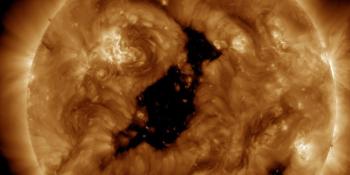
Coronal hole faces Earth

X1.5 solar flare

M2.7 solar flare, CME arrival possible
Güncel forum mesajları
Daha fazla konuSpaceWeatherLive.com'u Destekle!
Birçok insan SpaceWeatherLive'a Güneş aktivitelerini takip etmek ya da aurora görme şansı olup olmadığına bakmak için geliyor, ancak daha fazla trafikle birlikte sunucuları çevrimiçi tutmak da daha yüksek maliyetler gerektiriyor. SpaceWeatherLive'ı beğendiyseniz ve projeyi desteklemek istiyorsanız, reklamsız bir site için abonelik seçebilir veya bağış yapmayı düşünebilirsiniz. Sizin yardımınızla SpaceWeatherLive'ı çevrimiçi tutabiliriz!



Uzay Hava Durumu Gerçekleri
| Son X-patlaması | 2026/04/24 | X2.5 |
| Son M-patlaması | 2026/05/17 | M1.4 |
| Son jeomanyetik fırtına | 2026/05/16 | Kp6- (G2) |
| Lekesiz günler | |
|---|---|
| Son 365 gün | 3 gün |
| 2026 | 3 gün (2%) |
| Son lekesiz gün | 2026/02/24 |
| Aylık ortalama güneş lekesi sayısı | |
|---|---|
| Nisan 2026 | 79.3 -6.6 |
| Mayıs 2026 | 92.2 +12.9 |
| Son 30 gün | 97 +6.4 |