Перегляд архіву понеділок, 16 червня 2003
Звіт про сонячну активність
Будь-який згаданий у цьому звіті сонячний спалах має масштабний коефіцієнт, застосований Центром прогнозування космічної погоди (SWPC). Через масштабний коефіцієнт SWPC, сонячні спалахи подаються на 42% меншими, ніж науково обґрунтовані дані. Масштабуючий коефіцієнт було вилучено з наших архівних даних про сонячні спалахи, щоб відобразити справжні фізичні одиниці.
Звіт про сонячно-геофізичну активність 2003 Jun 16 2200 UTCПідтотовлено NOAA © SWPC і опрацьовано SpaceWeatherLive.com
Спільний звіт USAF/NOAA про сонячну та геофізичну активність
Випуск SDF номер 167, за 2200Z 16 Jun 2003IA. Аналіз активних сонячних областей і активності з 15 - 2100Z по 16 - 2100Z Solar activity was very high. New Region 386 (S07E71)
produced an X1/Sf flare at 15/2356 UTC with an associated Type II
(841 km/s) and Type IV radio sweep. SOHO/LACSO imagery indicates a
full halo CME, however the majority of the ejecta was off to the
east. Region 386 currently indicates a beta magnetic configuration
but its proximity to the east limb prevents a detailed analysis of
the magnetic complexity. Region 380 (S16W51) has slowed its rate of
decay and has developed a beta-gamma magnetic configuration. New
Region 386 was numbered today.
IB. Прогноз Сонячної Активності
Solar activity is expected to be at
moderate to high levels. Region 386 is expected to produce M-class
and possibly X-class activity.
IIA. Огляд Геофізичної Активності з 15 - 2100Z до 16 - 2100Z
The geomagnetic field was at unsettled to minor storm levels. The
source of the minor storm conditions may be associated with the
Boulder magnetometer scaling problem (see comment in VII). Solar
wind speed was in gradual decay from a peak near 600 km/s early in
the day to a minimum of 450 km/s by 1600UTC. Wind speed then
increased to 550 km/s by the end of the day.
IIB. Прогноз Геофізичної Активності
The geomagnetic field is
expected to be quiet to active with a chance of isolated minor storm
levels. Late on day one or early on day two, weak CME shock effects
are possible from the X1 event mentioned in IA. A coronal hole high
speed flow is expected late on day two and day three with isolated
minor storm levels possible.
III. Ймовірність події від 17 - Jun до 19 - Jun
| Клас M | 50% | 50% | 50% |
| Клас X | 20% | 20% | 20% |
| Протон | 30% | 20% | 20% |
| PCAF | green | ||
IV. Радіовипромінювання λ = 10,7см
  Спостережуваний       16 Jun 123
  Прогнозований   17 Jun-19 Jun  125/125/120
  Середнє значення за останні 90 днів        16 Jun 124
V. Геомагнітні А індекси
  Спостережуваний Afr/Ap 15 Jun  013/020
  За оцінками     Afr/Ap 16 Jun  014/023
  Прогнозований    Afr/Ap 17 Jun-19 Jun  012/015-020/030-020/030
VI. Ймовірність геомагнітної активності з 17 - Jun до 19 - Jun
| A. Середні Широти | |||
|---|---|---|---|
| Невеликі збурення | 25% | 30% | 35% |
| Слабка геомагнітна буря | 10% | 15% | 15% |
| Великий шторм | 05% | 05% | 05% |
| B. Високі Широти | |||
|---|---|---|---|
| Невеликі збурення | 30% | 40% | 40% |
| Слабка геомагнітна буря | 15% | 20% | 25% |
| Великий шторм | 05% | 10% | 15% |
Весь час у UTC
Останні новини

вівторок, 17 березня 2026
M2.7 solar flare, CME arrival possible
неділя, 1 лютого 2026
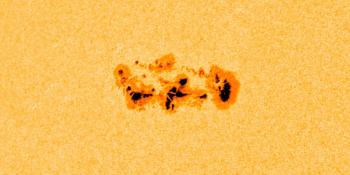
Complex sunspot region 4366

понеділок, 19 січня 2026
CME impact! S4 solar radiation storm
Останні повідомлення з форума
AR4403 11Filament CME from march 22nd 23Comet C/2026 A1 (MAPS) for the southern hemisphere 21Current Farside Activity 431AR4401 21
Більше темПідтримайте SpaceWeatherLive.com!
Багато людей заходять на SpaceWeatherLive, щоб стежити за сонячною активністю або якщо є можливість побачити полярне сяйво, але зі збільшенням трафіку зростають і витрати на підтримку серверів в мережі. Якщо вам подобається SpaceWeatherLive і ви хочете підтримати проект, ви можете вибрати підписку на безрекламний сайт або розглянути можливість зробити пожертву. З вашою допомогою ми зможемо підтримувати SpaceWeatherLive онлайн!



Факти про космічну погоду
| Останній X-спалах | 2026/02/04 | X4.21 |
| Останній M-спалах | 2026/03/18 | M2.7 |
| Останній геомагнітний шторм | 2026/03/23 | Kp5 (G1) |
| Дні без сонячних плям | |
|---|---|
| Останні 365 днів | 3 днів |
| 2026 | 3 днів (4%) |
| Останній день без сонячних спалахів | 2026/02/24 |
| Середня кількість сонячних плям протягом місяця | |
|---|---|
| лютого 2026 | 78.2 -34.3 |
| березня 2026 | 79.2 +1 |
| Останні 30 днів | 75.6 -9.1 |