Prohlížíte si archiv čtvrtek 6. září 2018
Vyberte požadovanou položku archivu
Reporty
Sluneční aktivita
Aurorální aktivita
Today one year ago: X9.3 solar flare
It has been many months since we've last seen a strong solar flare or even a decent sunspot region. It is no secret that we are well on our way to solar minimum. However, today exactly one year ago, our Sun looked very different compared to how it looks today. Multiple sunspot regions were visible but by far the most interesting sunspot region was sunspot region 2673. Sunspot region 2673 was on 6 September 2017 one of the most complex sunspot regions that we have seen this solar cycle and it erupted that day with an X9.3 (R3-strong) solar flare which will likely remain the strongest solar flare of the current solar cycle, solar cycle 24.
Poslední zprávy

X1.5 solar flare

M2.7 solar flare, CME arrival possible
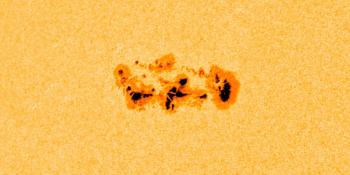
Complex sunspot region 4366
Nejnovější zprávy na fóru
Podpora SpaceWeatherLive.com!
Mnoho lidí navštěvuje SpaceWeatherLive, aby sledovali sluneční aktivitu nebo pokud je šance spatřit polární záři, ale s větší návštěvností přicházejí i vyšší náklady na udržování serverů online. Pokud se vám SpaceWeatherLive líbí a chcete projekt podpořit, můžete si zvolit předplatné pro web bez reklam nebo zvážit darování. S vaší pomocí můžeme SpaceWeatherLive udržet online!



Fakta o počasí ve vesmíru
| Poslední X-záblesk | 30. 03. 2026 | X1.5 |
| Poslední M-záblesk | 09. 04. 2026 | M1.0 |
| Poslední geomagnetická bouře | 03. 04. 2026 | Kp7- (G3) |
| Dny bez skvrn | |
|---|---|
| Posledních 365 dnů | 3 dnů |
| 2026 | 3 dnů (3%) |
| Poslední den bez skvrn | 24. 02. 2026 |
| Průměrný měsíční počet slunečních skvrn | |
|---|---|
| března 2026 | 85.9 +7.7 |
| dubna 2026 | 114.3 +28.4 |
| Posledních 30 dnů | 101.8 +46.6 |