Archiv von Dienstag, 28 Oktober 2014 anzeigen
Wählen Sie den gewünschten Archiv-Artikel
Berichte
Sonnenaktivität
Polarlichtaktivität
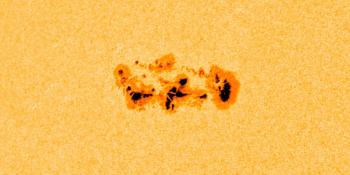
2003 Halloween solar storms, sunspot region 2192
It is today exactly 11 years ago that sunspot region 486 erupted with a massive X17.2 solar flare (see header image as well). This was one of many strong solar flares caused by three large and impressive sunspot regions during solar cycle 23. It was also during this period that the largest solar flare in modern times erupted: an extreme X28 (which might have been as strong as X45) solar flare on 4 November 2003 by sunspot region 486. These three regions launched numerous coronal mass ejections towards Earth causing several days of extreme geomagnetic storming. Aurora was seen from latitudes as low as Portugal and even Texas! Last year we made a special video to celebrate these so called ''Halloween solar storms of 2003'' and today we are going to dust of this video and show it one more time. But back to today: of course we still have sunspot region 2192 on the earth-facing solar disk which has been erupting with an occasional M-class solar flare today. In this article we will also take a closer look at sunspot region 2192.
Neueste Nachrichten

M2.7 solar flare, CME arrival possible
Complex sunspot region 4366

CME impact! S4 solar radiation storm
Neue Nachrichten im Forum
Unterstützen Sie SpaceWeatherLive!
Viele Menschen nutzen SpaceWeatherLive, um die Sonnenaktivität zu verfolgen oder um zu schauen, ob es eine Chance gibt Polarlichter, zu sehen. Mit zunehmendem Datenverkehr steigen jedoch die Kosten für die Serververfügbarkeit. Wenn Ihnen SpaceWeatherLive gefällt und Sie das Projekt unterstützen möchten, können Sie ein Abonnement für eine werbefreie Website abschließen oder eine Spende tätigen. Mit Ihrer Hilfe können wir SpaceWeatherLive online halten!



Weltraumwetter-Fakten
| Letzte Klasse X-Eruption | 04/02/2026 | X4.21 |
| Letzte Klasse M-Eruption | 18/03/2026 | M2.7 |
| Letzter geomagnetischer Sturm | 23/03/2026 | Kp5 (G1) |
| Tage ohne Flecken | |
|---|---|
| Letzte 365 Tage | 3 Tage |
| 2026 | 3 Tage (4%) |
| Letzter fleckenlose Tag | 24/02/2026 |
| Monatliche mittlere Sonnenfleckenzahl | |
|---|---|
| Februar 2026 | 78.2 -34.3 |
| März 2026 | 77.7 -0.5 |
| Letzte 30 Tage | 72.3 -15.7 |