Archiv von Montag, 9 Juni 2025 anzeigen
Tägliches Bulletin zur solaren und geomagnetischen Aktivität des SIDC
Ausgestellt: 2025 Jun 09 1239 UTC
Vorhersage des SIDC
Sonneneruptionen
C-class flares expected, (probability >=50%)
Geomagnetismus
Active conditions expected (A>=20 or K=4)
Sonnenprotonen
Quiet
| 10cm Fluss | Ap | |
|---|---|---|
| 09 Jun 2025 | 113 | 019 |
| 10 Jun 2025 | 112 | 027 |
| 11 Jun 2025 | 111 | 021 |
Solaraktive Regionen und Flares
Solar flaring activity was low over the past 24 hours, with only C-class flares recorded. A total of seven numbered active regions were visible on the solar disk during this period. Most regions exhibited simple photospheric magnetic field configurations, predominantly Alpha or Beta, and remained stable or showed signs of decay. SIDC Sunspot Group 520, located at N04E25, was the only region showing clear signs of growth, maintaining a Beta magnetic configuration. The largest event was a C1.9 flare (SIDC Flare 4587), which peaked at 13:03 UTC on June 08 and originated from SIDC Sunspot Group 513 (NOAA Active Region 4105), currently located at S16E07. SIDC Sunspot Group 513 remained the primary source of flaring activity. Solar flaring activity is expected to remain low over the next 24 hours, with C-class flares very likely and a small chance for isolated M-class flares.
Koronaler Massenauswurf
A halo coronal mass ejection (SIDC CME 517) was detected in LASCO/C2 coronagraph imagery starting at 07:36 UTC on June 8. The CME was directed primarily toward the southwest as seen from Earth and is associated with a filament eruption from behind the southwest limb. Given the source region's location behind the limb, no Earth-directed component is expected, and the CME is not forecast to have any geomagnetic impact. No other Earth-directed CMEs were identified in the available coronagraph data over the past 24 hours.
Koronale Löcher
Four coronal holes are currently visible on the solar disk. SIDC Coronal Hole 118, an equatorial coronal hole with negative polarity, crossed the central meridian on June 8 and has since progressed toward the western limb. SIDC Coronal Hole 104, a mid-latitude southern coronal hole with positive polarity, is positioned on the eastern side of the Sun. Finally, SIDC Coronal Hole 111, a mid-latitude southern coronal hole with negative polarity, and SIDC Coronal Hole 117, a mid-latitude northern coronal hole with positive polarity, crossed the central meridian on June 2 and June 5 respectively, and are now nearing the western limb.
Sonnenwind
Solar wind conditions were moderately disturbed over the past 24 hours due to the continued influence of an interplanetary coronal mass ejection (ICME) that arrived yesterday. The total interplanetary magnetic field (Bt) remained elevated, fluctuating between 5 and 12 nT. The Bz component exhibited significant variability, ranging between -9.5 and +10.2 nT, with extended periods of southward orientation that contributed to geomagnetic activity. The solar wind speed showed a gradual increase from approximately 400 km/s to 550 km/s. On June 10 and 11, the arrival of a high-speed solar wind stream is expected, originating from SIDC Coronal Hole 118, an equatorial coronal hole with negative polarity that crossed the central meridian on June 8 and is now nearing the western limb.
Geomagnetismus
Geomagnetic conditions were active both globally and locally over the past 24 hours. The NOAA Kp index reached a maximum of 4, and the K_BEL index also recorded values up to 4. This activity was driven by moderately disturbed solar wind conditions associated with the continued influence of an interplanetary coronal mass ejection (ICME) that arrived yesterday, and particularly by prolonged periods of southward orientation of the Bz component. Over the next 24 hours, active conditions with possible storm-level (K-index up the 6) intervals are expected as Earth begins to experience the influence of the anticipated high-speed solar wind stream associated with SIDC Coronal Hole 118.
Protonenflusswerte
The greater-than-10 MeV proton flux, as measured by GOES-18, remained at nominal levels over the past 24 hours and is expected to stay at nominal levels throughout the next 24 hours. No solar energetic particle events were detected, and none are currently anticipated.
Elektronenflüsse im geostationären Orbit
The greater-than-2 MeV electron flux, as measured by the GOES-19 satellite, remained below the 1000 pfu alert threshold over the past 24 hours. While the GOES-18 satellite briefly recorded values reaching this threshold. Electron fluxes are expected to stay mostly below the alert threshold during the next 24 hours. The 24-hour electron fluence remained at normal to moderate levels and is anticipated to persist at those levels throughout the next day.
Die heute international geschätzte Sonnenfleckenanzahl (ISN): 084, basierend auf 20 Stationen.Solarindizes für den 08 Jun 2025
| Wolf-Zahl Catania | /// |
| 10cm Solarflux | 115 |
| AK Chambon La Forêt | 034 |
| AK Wingst | 018 |
| Geschätzer Ap-Wert | 018 |
| Geschätzte internationale Sonnenfleckenzahl | 070 - Basierend auf 22 Stationen |
Zusammenfassung auffälliger Ereignisse
| Tag | Start | Max | Ende | Loc | Stärke | OP | 10cm | Catania/NOAA | Radioburst-Typen | |
|---|---|---|---|---|---|---|---|---|---|---|
| Keine | ||||||||||
Zur Verfügung gestellt vom Solar Influences Data Analysis Center© - SIDC - Verarbeitet von SpaceWeatherLive
Alle Zeiten in UTC
Neueste Nachrichten
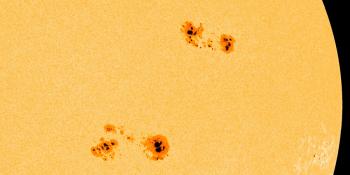
X1.1 solar flare, G2 watch
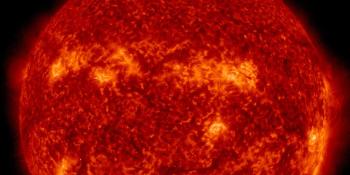
G3 geomagnetic storm watch for 4 and 5 June
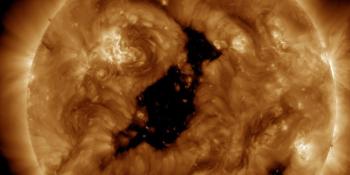
Coronal hole faces Earth
Neue Nachrichten im Forum
Unterstützen Sie SpaceWeatherLive!
Viele Menschen nutzen SpaceWeatherLive, um die Sonnenaktivität zu verfolgen oder um zu schauen, ob es eine Chance gibt Polarlichter, zu sehen. Mit zunehmendem Datenverkehr steigen jedoch die Kosten für die Serververfügbarkeit. Wenn Ihnen SpaceWeatherLive gefällt und Sie das Projekt unterstützen möchten, können Sie ein Abonnement für eine werbefreie Website abschließen oder eine Spende tätigen. Mit Ihrer Hilfe können wir SpaceWeatherLive online halten!



Weltraumwetter-Fakten
| Letzte Klasse X-Eruption | 04/07/2026 | X1.3 |
| Letzte Klasse M-Eruption | 22/07/2026 | M3.6 |
| Letzter geomagnetischer Sturm | 23/07/2026 | Kp5+ (G1) |
| Tage ohne Flecken | |
|---|---|
| Letzte 365 Tage | 3 Tage |
| 2026 | 3 Tage (1%) |
| Letzter fleckenlose Tag | 24/02/2026 |
| Monatliche mittlere Sonnenfleckenzahl | |
|---|---|
| Juni 2026 | 94.4 -7.1 |
| Juli 2026 | 71.9 -22.5 |
| Letzte 30 Tage | 83.1 -25.4 |