Archiv von Freitag, 13 Juni 2025 anzeigen
Tägliches Bulletin zur solaren und geomagnetischen Aktivität des SIDC
Ausgestellt: 2025 Jun 13 1231 UTC
Vorhersage des SIDC
Sonneneruptionen
C-class flares expected, (probability >=50%)
Geomagnetismus
Quiet (A<20 and K<4)
Sonnenprotonen
Quiet
| 10cm Fluss | Ap | |
|---|---|---|
| 13 Jun 2025 | 142 | 017 |
| 14 Jun 2025 | 142 | 017 |
| 15 Jun 2025 | 142 | 017 |
Solaraktive Regionen und Flares
Solar flaring activity was low over the past 24 hours, with several C-class flares recorded. A total of eight numbered sunspot groups were visible on the solar disk. The largest flare was a C5.8 flare (SIDC Flare 4624) peaking on June 12 at 17:48 UTC, which was produced by SIDC Sunspot Group 516 (NOAA Active Region 4107). This region, along with Group 523 (NOAA AR 4114), showed signs of growth and increasing activity. SIDC Sunspot Group 516 (NOAA Active Region 4107), located at S15W71, maintained a Beta-Delta magnetic configuration produced multiple minor flares. SIDC Sunspot Group 513 (NOAA AR 4105, Beta-Gamma) also produced several notable flares, including a C3.9 flare. Given the number and the magnetic complexity of several regions C-class flares are very likely over the next 24 hours, with a chance for M-class flares.
Koronaler Massenauswurf
The greater-than-10 MeV proton flux, as measured by GOES-18, remained at background levels over the past 24 hours and is expected to stay at background levels throughout the next 24 hours. No solar energetic particle events were detected, and none are currently anticipated.
Koronale Löcher
The large SIDC Coronal Hole 104 (mid-latitude south coronal hole with a negative polarity) is currently transiting the central meridian. It is a recurrent coronal that first reached the central meridian on June 08.
Sonnenwind
Solar wind parameters suggest that Earth is currently under the combined influence of a high-speed stream (HSS) associated with SIDC Coronal Hole 118 and the glancing arrival of a weak interplanetary coronal mass ejection (ICME), likely SIDC CME 516. Solar wind conditions remained moderately disturbed over the past 24-hour period. Solar wind speed was relatively stable and within a moderate range, fluctuating between 381?km/s and 480?km/s. The interplanetary magnetic field (IMF) was enhanced: the total field strength (Bt) gradually increased throughout the period, peaking at 17.4?nT around 06:30 UTC. The southward component (Bz) was predominantly negative, reaching a minimum of -16.4?nT, and remained southward for extended durations. The phi angle stayed mostly in the negative sector, indicating a persistent magnetic connection to the negative polarity high-speed stream from SIDC Coronal Hole 118. The enhanced IMF values and the smooth rotations observed in the magnetic field components suggest the arrival of a transient solar wind structure, most likely SIDC CME 516. This CME was observed as a slow, wide eruption on June, directed primarily toward the northeast and linked to a small filament eruption in the northeastern quadrant of the solar disk. Although it was initially not expected to impact Earth, a weak flank encounter now appears to be contributing to the current solar wind configuration. The interplanetary magnetic field is expected to gradually return to nominal values following the passage of this transient structure. In approximately three days, a new high-speed stream associated with SIDC Coronal Hole 104 (a mid-latitude southern coronal hole with negative polarity, which crossed the central meridian on June 12) may lead to renewed enhancements in solar wind conditions.
Geomagnetismus
Geomagnetic conditions were significantly disturbed over the past 24 hours. The NOAA Kp index reached Moderate Storm levels, peaking at Kp = 6+ between 01:00 UTC and 06:00 UTC on June 13, in response to sustained southward interplanetary magnetic field conditions and an enhanced total field strength. The local K_BEL index indicated active to minor storm conditions, with values reaching K = 5 between 18:00 UTC and 20:00 UTC on June 12, and remained at K = 4 for several intervals during the storm’s main phase. These geomagnetic disturbances were driven by the combined effects of a high-speed solar wind stream (HSS) originating from SIDC Coronal Hole 118 and the unexpected arrival of a weak interplanetary coronal mass ejection (ICME), most likely linked to SIDC CME 516, which was observed on June 8. Geomagnetic activity is expected to gradually decline over the next 24 hours as the transient structure passes. However, unsettled to active conditions may persist, especially if the southward interplanetary magnetic field remain negative for prolonged period. Another round of elevated geomagnetic activity could follow in a 3-4 days with the expected arrival of the high-speed stream associated with SIDC Coronal Hole 104.
Protonenflusswerte
The greater-than-10 MeV proton flux, as measured by GOES-18, remained at background levels over the past 24 hours and is expected to stay at background levels throughout the next 24 hours. No solar energetic particle events were detected, and none are currently anticipated.
Elektronenflüsse im geostationären Orbit
The greater-than-2 MeV electron flux, as measured by the GOES-18 and GOES-19 satellite, remained below the 1000 pfu alert threshold over the past 24 hours. Electron fluxes are expected to stay mostly below the alert threshold during the next 24 hours. The 24-hour electron fluence remained at normal to moderate levels and is anticipated to persist at those levels throughout the next day.
Die heute international geschätzte Sonnenfleckenanzahl (ISN): 146, basierend auf 22 Stationen.Solarindizes für den 12 Jun 2025
| Wolf-Zahl Catania | 163 |
| 10cm Solarflux | 142 |
| AK Chambon La Forêt | 048 |
| AK Wingst | 028 |
| Geschätzer Ap-Wert | 030 |
| Geschätzte internationale Sonnenfleckenzahl | 138 - Basierend auf 27 Stationen |
Zusammenfassung auffälliger Ereignisse
| Tag | Start | Max | Ende | Loc | Stärke | OP | 10cm | Catania/NOAA | Radioburst-Typen | |
|---|---|---|---|---|---|---|---|---|---|---|
| Keine | ||||||||||
Zur Verfügung gestellt vom Solar Influences Data Analysis Center© - SIDC - Verarbeitet von SpaceWeatherLive
Alle Zeiten in UTC
Neueste Nachrichten
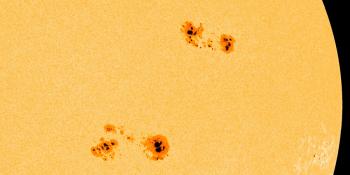
X1.1 solar flare, G2 watch
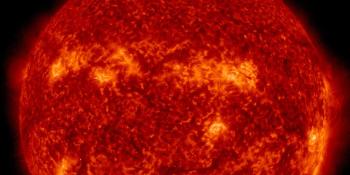
G3 geomagnetic storm watch for 4 and 5 June
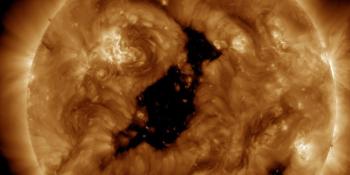
Coronal hole faces Earth
Neue Nachrichten im Forum
Unterstützen Sie SpaceWeatherLive!
Viele Menschen nutzen SpaceWeatherLive, um die Sonnenaktivität zu verfolgen oder um zu schauen, ob es eine Chance gibt Polarlichter, zu sehen. Mit zunehmendem Datenverkehr steigen jedoch die Kosten für die Serververfügbarkeit. Wenn Ihnen SpaceWeatherLive gefällt und Sie das Projekt unterstützen möchten, können Sie ein Abonnement für eine werbefreie Website abschließen oder eine Spende tätigen. Mit Ihrer Hilfe können wir SpaceWeatherLive online halten!



Weltraumwetter-Fakten
| Letzte Klasse X-Eruption | 04/07/2026 | X1.3 |
| Letzte Klasse M-Eruption | 22/07/2026 | M3.6 |
| Letzter geomagnetischer Sturm | 23/07/2026 | Kp5+ (G1) |
| Tage ohne Flecken | |
|---|---|
| Letzte 365 Tage | 3 Tage |
| 2026 | 3 Tage (1%) |
| Letzter fleckenlose Tag | 24/02/2026 |
| Monatliche mittlere Sonnenfleckenzahl | |
|---|---|
| Juni 2026 | 94.4 -7.1 |
| Juli 2026 | 71.9 -22.5 |
| Letzte 30 Tage | 83.1 -25.4 |