Archiv von Sonntag, 10 Mai 2026 anzeigen
Tägliches Bulletin zur solaren und geomagnetischen Aktivität des SIDC
Ausgestellt: 2026 May 10 1233 UTC
Vorhersage des SIDC
Sonneneruptionen
M-class flares expected (probability >=50%)
Geomagnetismus
Quiet (A<20 and K<4)
Sonnenprotonen
Quiet
| 10cm Fluss | Ap | |
|---|---|---|
| 10 May 2026 | 124 | 003 |
| 11 May 2026 | 125 | 004 |
| 12 May 2026 | 127 | 012 |
Solaraktive Regionen und Flares
The solar flaring activity has at low levels over the past 24 hours. A total of 5 numbered sunspot groups were identified on the visible solar disk. Most of the flaring activity was produced by SIDC Sunspot Group 860 (NOAA Active Region 4432), including a C3.7 flare (SIDC Flare 7660) peaking at 09:39 UTC on May 10. This region currently located at N13W46 has exhibited further growth and remains classified as magnetic type beta-gamma. SIDC Sunspot Group 866 (NOAA Active Region 4436) currently located at N18E65 has been re-assessed and appears to be the returning SIDC Sunspot Group 825 (previously NOAA Active Regions 4397/4419). It has produced only isolated low C-class flaring. SIDC Sunspot Group 862 (NOAA Active Region 4433) currently located at S16W16 remains classified as magnetic type beta, but has exhibited further decline. The remaining regions have been magnetically simple and quiet. The solar flaring activity is expected to reach moderate levels over the next 24 hours with likely isolated M-class flaring.
Koronaler Massenauswurf
No other Earth-directed coronal mass ejection (CMEs) have been identified in the available coronagraph imagery over the past 24 hours.
Koronale Löcher
A mid-latitude positive polarity coronal hole (SIDC Coronal Hole 159) is currently residing on the central meridian. The high-speed stream related to it might arrive at Earth on May 13, possibly mixed with any mild high-speed stream influence related to SIDC Coronal Hole 161, which has some chances of arrival on May 12.
Sonnenwind
Over the past 24 hours the solar wind parameters (as measured by ACE at L1) exhibited a slow return towards nominal slow solar wind conditions. The interplanetary magnetic field (B) was weak with a maximum value of 4.6 nT and a minimum Bz (north-south) component of -3 nT. The solar wind speed was on a declining trend varying in the range of 384 to 540 km/s. The B field phi angle was predominantly in the positive sector (directed away from the Sun). The solar wind parameters are expected to be at background slow solar wind conditions over the next days with some probability for a mild high-speed stream arrival related to SIDC Coronal Hole 161 late UTC on May 12.
Geomagnetismus
The geomagnetic conditions over the past 24 hours have been quiet. Predominantly quiet conditions are expected for the next days with small chances of active to minor storm conditions to be reached late UTC on May 12, pending a possible mild high-speed stream arrival associated with SIDC Coronal Hole 161.
Protonenflusswerte
Over the past 24 hours the greater than 10 MeV GOES proton flux was at nominal levels and is expected to remain so over the 24 hours over the next 24 hours.
Elektronenflüsse im geostationären Orbit
The greater than 2 MeV electron flux as measured by GOES 18 and GOES 19 was below the 1000 pfu threshold over the past 24 hours and is expected to remain so over the next days. The 24-hour electron fluence was at nominal levels and is expected to remain so over the next days.
Die heute international geschätzte Sonnenfleckenanzahl (ISN): 087, basierend auf 15 Stationen.Solarindizes für den 09 May 2026
| Wolf-Zahl Catania | /// |
| 10cm Solarflux | 122 |
| AK Chambon La Forêt | 007 |
| AK Wingst | 005 |
| Geschätzer Ap-Wert | 004 |
| Geschätzte internationale Sonnenfleckenzahl | 091 - Basierend auf 23 Stationen |
Zusammenfassung auffälliger Ereignisse
| Tag | Start | Max | Ende | Loc | Stärke | OP | 10cm | Catania/NOAA | Radioburst-Typen | |
|---|---|---|---|---|---|---|---|---|---|---|
| Keine | ||||||||||
Zur Verfügung gestellt vom Solar Influences Data Analysis Center© - SIDC - Verarbeitet von SpaceWeatherLive
Alle Zeiten in UTC
Neueste Nachrichten
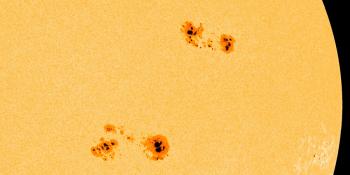
X1.1 solar flare, G2 watch
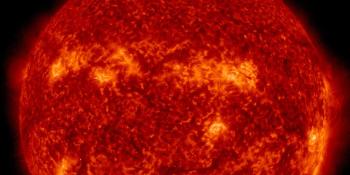
G3 geomagnetic storm watch for 4 and 5 June
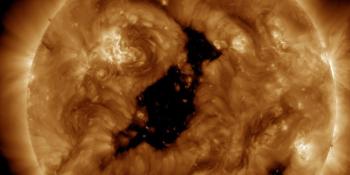
Coronal hole faces Earth
Neue Nachrichten im Forum
Unterstützen Sie SpaceWeatherLive!
Viele Menschen nutzen SpaceWeatherLive, um die Sonnenaktivität zu verfolgen oder um zu schauen, ob es eine Chance gibt Polarlichter, zu sehen. Mit zunehmendem Datenverkehr steigen jedoch die Kosten für die Serververfügbarkeit. Wenn Ihnen SpaceWeatherLive gefällt und Sie das Projekt unterstützen möchten, können Sie ein Abonnement für eine werbefreie Website abschließen oder eine Spende tätigen. Mit Ihrer Hilfe können wir SpaceWeatherLive online halten!



Weltraumwetter-Fakten
| Letzte Klasse X-Eruption | 04/07/2026 | X1.3 |
| Letzte Klasse M-Eruption | 20/07/2026 | M3.4 |
| Letzter geomagnetischer Sturm | 04/07/2026 | Kp7+ (G3) |
| Tage ohne Flecken | |
|---|---|
| Letzte 365 Tage | 3 Tage |
| 2026 | 3 Tage (1%) |
| Letzter fleckenlose Tag | 24/02/2026 |
| Monatliche mittlere Sonnenfleckenzahl | |
|---|---|
| Juni 2026 | 94.4 -7.1 |
| Juli 2026 | 70.7 -23.7 |
| Letzte 30 Tage | 85.8 -20.7 |