Visualizzazione archivio di venerdì, 31 gennaio AM
Rapporto attività solare
Ogni brillamento solare menzionato nel rapporto ha un fattore di scala, applicato dal Centro di Predizione Meteorologica Spaziale (SWPC). A causa del fattore di scala del SWPC, i brillamenti solari sono segnalati come ridotti del 42%, rispetto ai dati di qualità scientifica. Il fattore di scala è stato rimosso dai nostri dati archiviati sui brillamenti solari, per riflettere le unità fisiche reali.
Rapporto dell'Attività Geofisica Solare 2003 Jan 31 2200 UTCPreparati dal SWPC della NOAA© ed elaborati da SpaceWeatherLive.com
Rapporto Congiunto USAF/NOAA dell'Attività Solare e Geofisica
SDF Numero 031 Emesso alle 2200Z il Jan 31 2003IA. Analisi delle Regioni Solari Attive e Attività dalle 2100Z-30 alle 2100Z-31 Solar activity was low. There were three C-class flares
during the past 24 hours, the largest of which was a C2 at 0606 UTC.
Solar X-ray images clearly show that the source for all of these
events was a new active region just behind the East limb at about
S15. A 17 degree filament near S11E02 disappeared between 0223 UTC
and 1137 UTC. All of the active regions on the disk were stable and
quiet.
IB. Previsione dell'Attività Solare
Solar activity is expected to be low
for the next three days.
IIA. Sommario dell'Attività Geofisica dalle 2100Z-30 alle 2100Z-31
The geomagnetic field ranged from quiet to active levels with a minor
storm period at high latitudes. Solar wind data indicate the
presence of a high speed solar wind stream associated with a coronal
hole. The greater than 2 MeV electron fluxes reached high levels
during the past 24 hours.
IIB. Previsione dell'Attività Geofisica
The geomagnetic field is
expected to be mostly unsettled tomorrow, but there is a chance
for some active periods. Effects from the halo CME of 30 January
are expected to arrive some time around midday tomorrow and should
increase levels to active through the second day. Conditions should
decline to unsettled to slightly active on the third day.
III. Probabilità dell'Evento dalle Feb del 01 alle Feb del 03
| Classe M | 05% | 05% | 05% |
| Classe X | 01% | 01% | 01% |
| Protone | 01% | 01% | 01% |
| PCAF | green | ||
IV. Flusso di 10.7 cm di Penticton
  Osservato       31 Jan 120
  Previsto   01 Feb-03 Feb  125/125/130
  Media di 90 Giorni        31 Jan 156
V. Indici Geomagnetici A
  Osservato Afr/Ap 30 Jan  018/026
  Stimato     Afr/Ap 31 Jan  014/020
  Previsto    Afr/Ap 01 Feb-03 Feb  010/015-025/025-015/020
VI. Probabilità dell'Attività Geomagnetica dal 01 Feb al 03 Feb
| A. Latitudini Medie | |||
|---|---|---|---|
| Attivo | 30% | 40% | 35% |
| Tempesta minore | 20% | 25% | 15% |
| Tempesta maggiore-grave | 05% | 15% | 05% |
| B. Latitudini Alte | |||
|---|---|---|---|
| Attivo | 30% | 40% | 35% |
| Tempesta minore | 30% | 35% | 30% |
| Tempesta maggiore-grave | 15% | 15% | 05% |
Tutti gli orari in UTC
<< Vai alla pagina della panoramica giornaliera
Ultime notizie
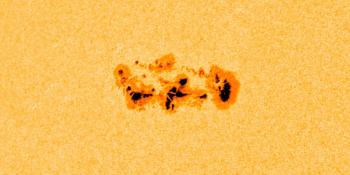
domenica, 1 febbraio PM
Complex sunspot region 4366

lunedì, 19 gennaio PM
CME impact! S4 solar radiation storm

domenica, 18 gennaio PM
X1.9 solar flare with earth-directed CME
Ultimi messaggi dal forum
AR4378 4AR4379 6Incoming & Unnumbered Active Regions 212Guess who’s back? AR4366! 4Guess who’s back? AR4366! 0
Altri argomentiSupporta SpaceWeatherLive.com!
A lot of people come to SpaceWeatherLive to follow the Solar activity or if there is a chance to see the aurora, but with more traffic comes higher costs to keep the servers online. If you like SpaceWeatherLive and want to support the project you can choose a subscription for an ad-free site or consider a donation. With your help we can keep SpaceWeatherLive online!



Notizie sul meteo spaziale
| Ultimo brillamento X | 2026/02/04 | X4.21 |
| Ultimo brillamento M | 2026/02/25 | M2.3 |
| Ultima tempesta geomagnetica | 2026/02/22 | Kp5+ (G1) |
| Giorni senza macchie | |
|---|---|
| Ultimi 365 giorni | 3 giorni |
| 2026 | 3 giorni (5%) |
| Ultimo giorno senza macchie | 2026/02/24 |
| Media mensile Numero di Macchie Solari | |
|---|---|
| gennaio 2026 | 112.6 -11.4 |
| febbraio 2026 | 78.9 -33.7 |
| Ultimi 30 giorni | 85.7 -36.4 |