Visualizzazione archivio di domenica, 18 maggio AM
Rapporto geofisico
Ogni brillamento solare menzionato nel rapporto ha un fattore di scala, applicato dal Centro di Predizione Meteorologica Spaziale (SWPC). A causa del fattore di scala del SWPC, i brillamenti solari sono segnalati come ridotti del 42%, rispetto ai dati di qualità scientifica. Il fattore di scala è stato rimosso dai nostri dati archiviati sui brillamenti solari, per riflettere le unità fisiche reali.
Sommario dell'Attività Solare e Geofisica 2003 May 18 0245 UTCPreparati dal SWPC della NOAA© ed elaborati da SpaceWeatherLive.com
Sommario Congiunto USAF/NOAA dell'Attività Solare e Geofisica
SGAS Numero 138 Emesso alle 0245Z il May 18 2003 Questo rapporto è compilato dai dati ricevuti a SWO il 17 MayA. Eventi Energetici
Inizio  Max  Fine  Rgn   Loc   Xray  Op 245MHz 10cm   Sweep
0305 0306 0306                       110
B. Eventi Protonici
Nessuna.
C. Sommario dell'Attività Geomagnetica
The geomagnetic field has been at
quiet to unsettled levels. The greater than 2 MeV electron flux at
geosynchronous orbit reached high levels today.
D. Riscaldamento Stratosferico
Nessuna.
E. Indici Giornalieri: (valori preliminari/stimati in tempo reale)
10 cm 102  SSN 081  Afr/Ap 010/009   X-ray Background B1.6
Fluenza Protonica Giornaliera (accumulo di flusso in 24 ore)
GT 1 MeV 1.6e+05   GT 10 MeV 1.1e+04 p/(cm2-ster-day)
(Orbita sincrona di W93 gradi del satellite GOES-8)
Fluenza di Elettroni Giornaliera
GT 2 MeV 2.70e+08 e/(cm2-ster-day)
(Orbita sincrona di W75 gradi del satellite GOES-12)
Indice K di 3 ore
Boulder 2 3 3 2 3 3 1 2 Planetary 3 3 3 2 3 2 1 ?
F. Commenti
  The GOES 10 energetic proton detectors are showing
intermittent, high noise levels in the higher energy proton channels
(greater than about 80 MeV). This problem was first noticed in data
taken April 26, 2003. To ensure continued operational monitoring of
important energetic particle data, it is necessary to reassign
primary/secondary designations for the GOES Space Environment
Monitor (SEM) detectors. As of 1500 UT on May 15, GOES-8 became the
primary satellite for protons. GOES 12 will be the primary satellite
for magnetometer, X-ray, and electron measurements. GOES 10 will be
the secondary satellite for all SEM sensors - magnetometer, X-ray
sensor, and energetic particle sensor. This short-term solution
(approximately 2 - 3 months) will be in place until we define and
implement a permanent fix. A more detailed explanation can be found
at: http://www.sec.noaa.gov/GOES.html.
Tutti gli orari in UTC
<< Vai alla pagina della panoramica giornaliera
Ultime notizie

martedì, 17 marzo PM
M2.7 solar flare, CME arrival possible
domenica, 1 febbraio PM
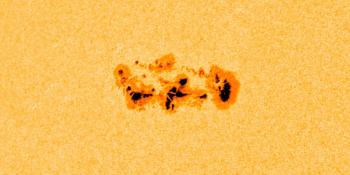
Complex sunspot region 4366
lunedì, 19 gennaio PM
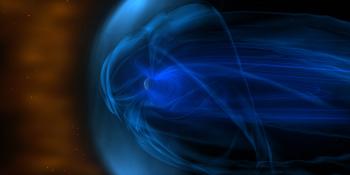
CME impact! S4 solar radiation storm
Ultimi messaggi dal forum
Altri argomentiSupporta SpaceWeatherLive.com!
A lot of people come to SpaceWeatherLive to follow the Solar activity or if there is a chance to see the aurora, but with more traffic comes higher costs to keep the servers online. If you like SpaceWeatherLive and want to support the project you can choose a subscription for an ad-free site or consider a donation. With your help we can keep SpaceWeatherLive online!



Notizie sul meteo spaziale
| Ultimo brillamento X | 2026/02/04 | X4.21 |
| Ultimo brillamento M | 2026/03/26 | M4.0 |
| Ultima tempesta geomagnetica | 2026/03/25 | Kp5+ (G1) |
| Giorni senza macchie | |
|---|---|
| Ultimi 365 giorni | 3 giorni |
| 2026 | 3 giorni (4%) |
| Ultimo giorno senza macchie | 2026/02/24 |
| Media mensile Numero di Macchie Solari | |
|---|---|
| febbraio 2026 | 78.2 -34.3 |
| marzo 2026 | 80.2 +2 |
| Ultimi 30 giorni | 77.8 -4.5 |