Latest news updates Subscribe
Coronal hole faces Earth
poniedziałek, 11 listopada 2024 15:54 UTC
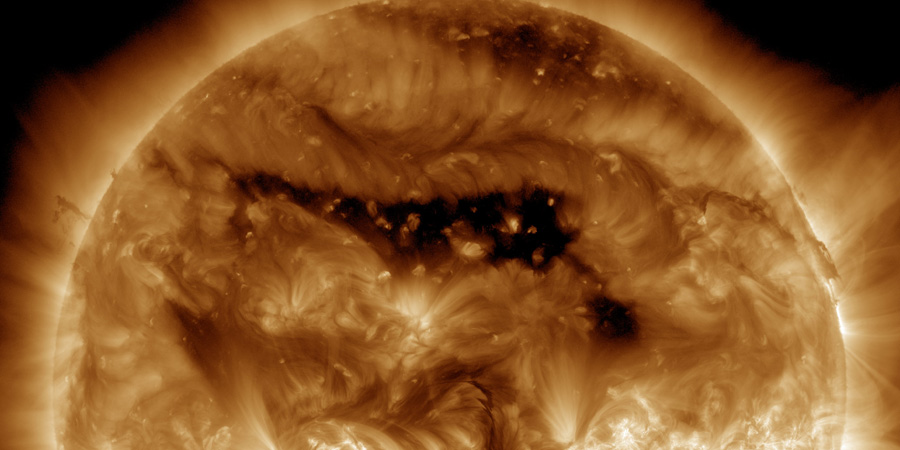
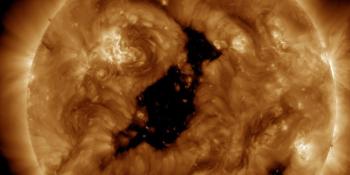
Northern hemisphere sky watchers are having a cracking start to their aurora season. The past few months, we have had major solar flares, coronal mass ejection impacts and in general fairly high geomagnetic activity. Welcome solar maximum! So many people have already spotted aurora from their locations even those who do not live close to the arctic circle. Really amazing to see... and today we have more good news for you as we have a coronal hole facing our planet today which is sending a high speed solar wind stream towards our planet.
X2.0 solar flare
piątek, 1 listopada 2024 17:13 UTC

Two weekends ago we attended the 2024 Aurora Summit in Wisconsin, USA of which we were a proud platinum sponsor. A truly unforgettable experience to meet so many enthusiastic visitors who use our website and app on a daily basis. An event we will never forget. After that we Europeans traveled the fantastic American south-west so apologies if our updates have been irregular the past 14 days. But for sure, if you have the possibility, be sure to visit next year's summit and maybe we will see you there!
X1.8 solar flare, severe geomagnetic storm watch
środa, 9 października 2024 14:29 UTC
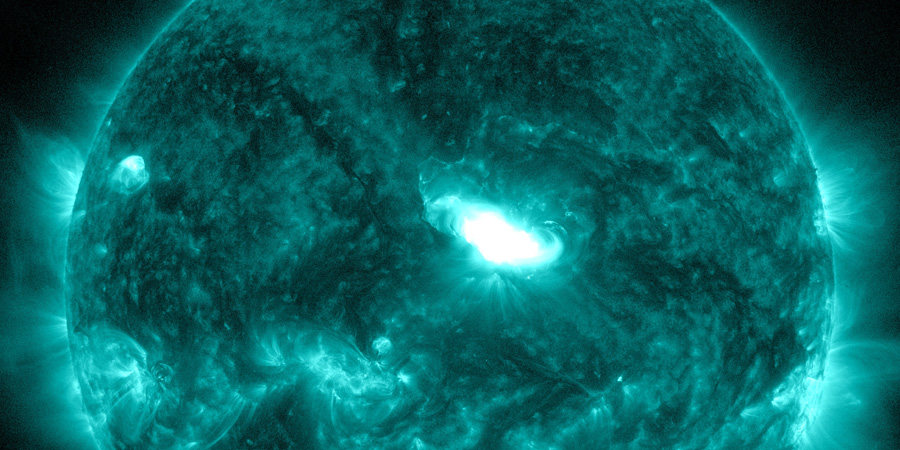
Wow. We are writing this news article with a heart filled with excitement. This night at 01:56 UTC we had a major solar flare which launched an equally as impressive coronal mass ejection into space. Earth-facing sunspot region 3848 produced a long duration X1.8 solar flare (R3-strong) which peaked at 01:56 UTC. This region is in a perfect earth-facing position and it became quickly clear that it was an eruptive solar flare.
Double X-flares, glancing blow possible
wtorek, 8 października 2024 17:14 UTC
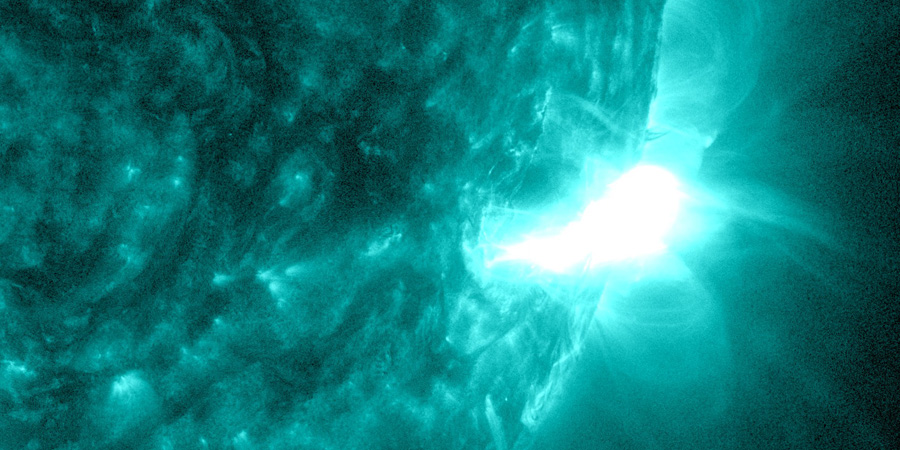
Solar activity reached high levels with an X2.1 solar flare that peaked at 19:02 UTC yesterday. This event came from sunspot region 3842 which was followed by a long duration X1.0 solar flare which was a combined effort between sunspot region 3842 and 3844.
Incoming CME, G3 geomagnetic storm watch
sobota, 5 października 2024 12:09 UTC

The anticipated CME from the X7 solar flare has turned out to be a nothing-burger. There was no notable impact and aurora displays were confined mostly to arctic latitudes.
X9.0 solar flare! Strongest flare of Solar Cycle 25!
czwartek, 3 października 2024 18:06 UTC

Sunspot region 3842 is on fire! This region is in a perfect earth-facing position and today produced the strongest solar flare of the current solar cycle! It was an X9.05 solar flare (R3-strong) that peaked at 12:18 UTC. This is in fact the strongest solar flare in 7 years. The last time we had solar flares bigger than this one was back in 2017! Yes that is the previous Solar Cycle!
X7.1 solar flare with earth-directed CME
środa, 2 października 2024 02:43 UTC

A major X7.1 solar flare (R3 radio blackout) peaked on 1 October at 22:20 UTC. The eruption took place around complex Beta-Gamma-Delta sunspot region 3842 close to the center of the earth-facing solar disk. This was in fact the second strongest solar flare of the current Solar Cycle thus far! An exciting jump in solar activity after a relatively quiet period with multiple potent sunspot regions currently on the solar disk!
X4.5 solar flare with a fast coronal mass ejection
sobota, 14 września 2024 22:22 UTC
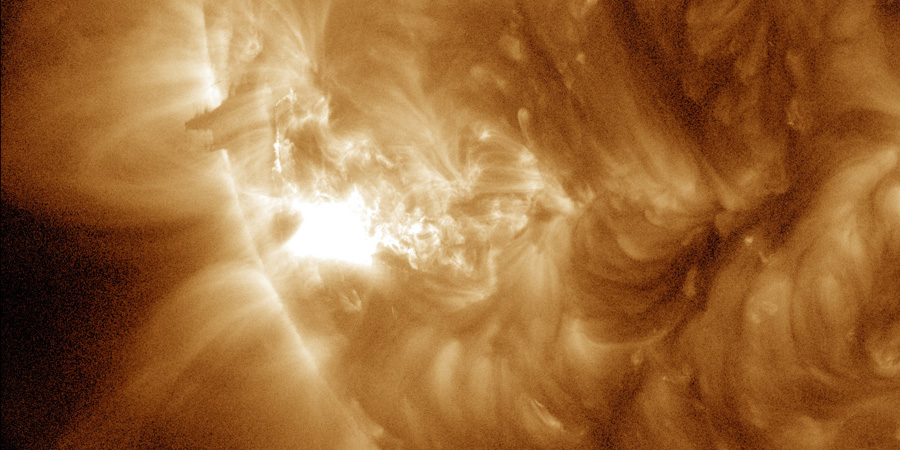
Sunspot region 3825 which is close to the east limb and slowly rotating into an earth-facing position has produced a long-duration X4.5 class solar flare (R3-strong) today that peaked at 15:29 UTC. This is the fifth largest solar flare of the current Solar Cycle.
G3 geomagnetic storm watch due to CME passage
czwartek, 12 września 2024 17:57 UTC
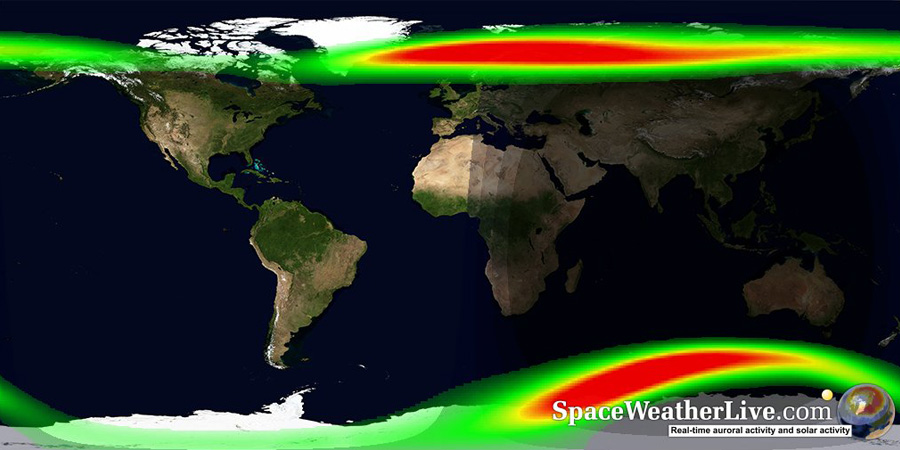
Earlier today we saw the arrival of one but perhaps even multiple coronal mass ejections at our planet. Geomagnetic storm conditions up the G3 (Kp7) level have already been observed but we are still very much under the influence of these coronal mass ejections as they pass Earth.
Severe G4 geomagnetic storm
poniedziałek, 12 sierpnia 2024 15:11 UTC

Severe G4 geomagnetic storm conditions have now been observed which stands for a Kp of 8!
Najnowsze wiadomości
G3 geomagnetic storm watch for 4 and 5 June
Coronal hole faces Earth

X1.5 solar flare
Najnowsze wiadomości z forum
Wesprzyj SpaceWeatherLive.com!
Wiele ludzi odwiedza stronę SpaceWeatherLive, aby śledzić aktywność słońca lub czy jest szansa na zobaczenie zorzy, ale większy ruch powoduje większe koszty utrzymania serwerów. Jeżeli podoba ci się strona SpaceWeatherLive i chciałbyś/chciałabyś wesprzeć ten projekt to możesz kupić subskrypcje aby uzyskać dostęp do strony bez reklam lub kupić darowiznę. Dzięki waszej pomocy, pomagacie utrzymać serwery SpaceWeatherLive!



Fakty na temat pogody kosmicznej
| Ostatnie rozbłyski klasy X | 2026/06/03 | X1.0 |
| Ostatnie rozbłyski klasy M | 2026/06/03 | M7.9 |
| Ostatnia burza geomagnetyczna | 2026/05/16 | Kp6- (G2) |
| Dni bez plam słonecznych | |
|---|---|
| Ostatnie 365 dni | 3 Dni |
| 2026 | 3 Dni (2%) |
| Ostatni dzień bez plamy słonecznej | 2026/02/24 |
| Średnia miesięczna liczba plam słonecznych | |
|---|---|
| kwietnia 2026 | 79.3 -6.6 |
| czerwca 2026 | 144.3 +65 |
| Ostatnie 30 dni | 99 +5.2 |