Arşiv Perşembe, 30 Ocak 2014 görüntüleniyor
SIDC'den güneş ve jeomanyetik aktivite hakkında günlük bülten
Yayınlandı: 2014 Jan 30 1241 UTC
SIDC Tahmini
Güneş patlamaları
Active (M-class flares expected, probability >=50%)
Jeomanyetizma
Quiet (A<20 and K<4)
Güneş protonları
Quiet
| 10cm akı | Ap | |
|---|---|---|
| 30 Jan 2014 | 160 | 003 |
| 31 Jan 2014 | 162 | 004 |
| 01 Feb 2014 | 164 | 009 |
Bülten
Solar activity has been at active levels over the last 24 hours. 11 C- and 2 M-class flares were recorded, which nearly all originated in the mixed polarity region near NOAA 1967's main spot. The strongest was an M2-flare peaking at 06:39UT. Of note was also a long duration C7-flare starting at 14:11UT and ending at 16:36UT. So far, this LDE was the most energetic in terms of NOAA 1967's integrated flare flux history. NOAA 1968 was the only other active region being able to produce a C-flare (C3 peaking at 04:46UT). The x-ray background has been all day above the C1-level. Active conditions are expected to continue, with a slight chance on an X-class flare. The CMEs associated with NOAA 1967's flaring activity were directed to the East and away from Earth. A faint halo CME was observed early on 29 January. Though it may be related to the frontside filament eruption event early on 29 January (trailing NOAA 1960 and 1959), it may also be related to a backside event that took place about an hour earlier (late 28 January, around 22:50UT) in the same line of sight. Most recent, but incomplete STEREO-A data now seem to favor the latter scenario. Earth is exiting the high speed wind stream. Solar wind has returned to average conditions, with a speed near 350 km/s and Bz fluctuating between -5 and +5 nT. Geomagnetic conditions were quiet. Solar wind may continue to be modulated by the effects of small coronal holes that have passed the central meridian on 27 and 29 January. Quiet geomagnetic conditions are expected. Late on 1 February, any effects of the 29 January frontside CME may drive local geomagnetic conditions to isolated active levels. Otherwise, quiet conditions should persist.
Bugünün tahmini uluslararası güneş lekesi sayısı (ISN): 1 Tahmini gunes lekesi sayisi, 2 Istasyon sayisi.29 Jan 2014 için güneş endeksleri
| Kurt numarası Catania | 107 |
| 10cm güneş akısı | 156 |
| AK Chambon La Forêt | 011 |
| AK Wingst | 006 |
| Tahmini Ap | 006 |
| Tahmini uluslararası güneş lekesi sayısı | 065 - 12 istasyonlarına göre |
Dikkat çeken olayların özeti
| Gün | Başlamak | Maksimum | Son | Yer | Kuvvet | OP | 10cm | Katanya/NOAA | Radyo patlaması türleri |
|---|---|---|---|---|---|---|---|---|---|
| 30 | 0633 | 0639 | 0644 | S15E54 | M2.1 | SF | 28/1967 | ||
| 30 | 0754 | 0811 | 0841 | S12E52 | M1.1 | SF | 69 | 28/1967 | III/1 |
Güneş Etkileri Veri Analiz Merkezi tarafından sağlanmıştır© - SIDC - SpaceWeatherLive tarafından işlendi
UTC'deki tüm zamanlar
<< Günlük genel bakış sayfasına git
Son haberler

X1.5 solar flare

M2.7 solar flare, CME arrival possible
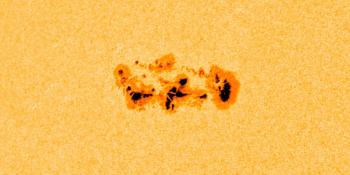
Complex sunspot region 4366
Güncel forum mesajları
SpaceWeatherLive.com'u Destekle!
Birçok insan SpaceWeatherLive'a Güneş aktivitelerini takip etmek ya da aurora görme şansı olup olmadığına bakmak için geliyor, ancak daha fazla trafikle birlikte sunucuları çevrimiçi tutmak da daha yüksek maliyetler gerektiriyor. SpaceWeatherLive'ı beğendiyseniz ve projeyi desteklemek istiyorsanız, reklamsız bir site için abonelik seçebilir veya bağış yapmayı düşünebilirsiniz. Sizin yardımınızla SpaceWeatherLive'ı çevrimiçi tutabiliriz!



Uzay Hava Durumu Gerçekleri
| Son X-patlaması | 2026/03/30 | X1.5 |
| Son M-patlaması | 2026/04/09 | M1.0 |
| Son jeomanyetik fırtına | 2026/04/20 | Kp5 (G1) |
| Lekesiz günler | |
|---|---|
| Son 365 gün | 3 gün |
| 2026 | 3 gün (3%) |
| Son lekesiz gün | 2026/02/24 |
| Aylık ortalama güneş lekesi sayısı | |
|---|---|
| Mart 2026 | 85.9 +7.7 |
| Nisan 2026 | 79.3 -6.7 |
| Son 30 gün | 92.4 +29.5 |