Latest news updates Subscribe
X1.9 solar flare, Coronal hole faces Earth
Montag, 1 Dezember 2025 18:02 UTC
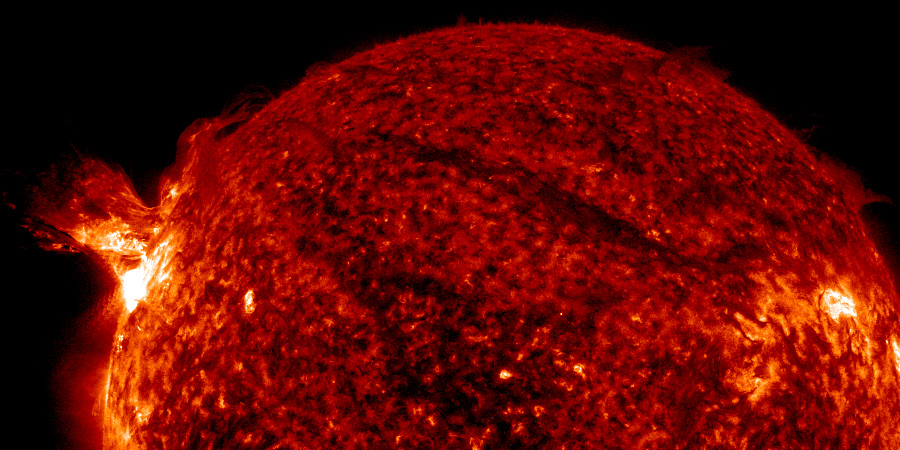
Welcome to December! New month, new solar activity! Sunspot region 4274 took center stage at the beginning of November with numerous X-class events and some gorgeous coronal mass ejections, some of which arrived at Earth and caused severe G4 geomagnetic storm conditions. However she is not done yet. This sunspot region survived its trip around the far side of the Sun and she is flaring again at the start of December but with a new number: 4299. This morning ex-4274 announced her return with an X1.9 (R3-strong) solar flare that peaked at 02:49 UTC!
X4.0 solar flare
Freitag, 14 November 2025 19:11 UTC
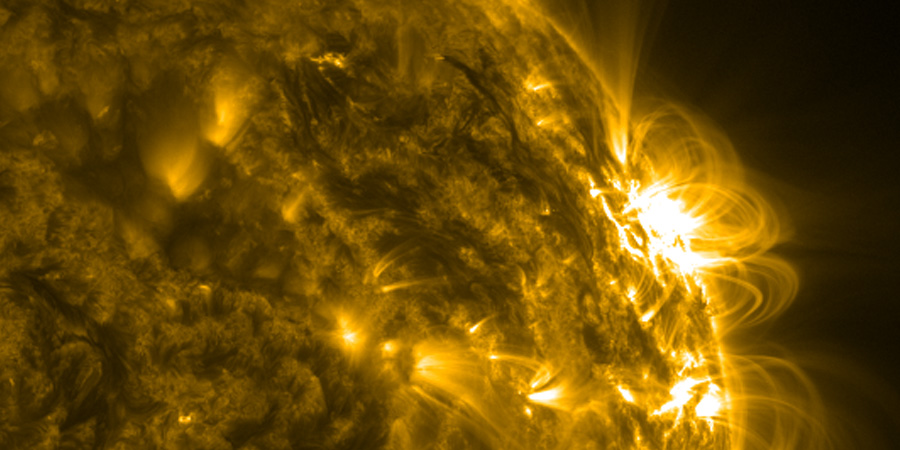
A X4.0 (R3-strong) solar flare peaked at 08:30 UTC this morning. It was of course departing sunspot region 4274 which has been the source of so many solar flares and even geomagnetic storms this past week that provided the fireworks.
X5.1 solar flare, G4 geomagnetic storm watch
Dienstag, 11 November 2025 19:07 UTC

Here she blows! Sunspot region 4274 produced its strongest solar flare thus far since it appeared on the east limb and the sixth strongest solar flare of the current solar cycle. An impressive long duration and highly eruptive X5.1 (R3-strong) solar flare peaked this morning at 10:04 UTC.
X1.2 solar flare with earth-directed CME
Montag, 10 November 2025 18:28 UTC

Sunspot region 4274 is at it again with a long duration X1.2 solar flare (R3-strong) that peaked at 09:20 UTC this morning. Solar imagery from SDO shows its an eruptive event along with associated Type II and IV radio sweeps and a coronal mass ejection was launched into space. Considering the location of this sunspot region near the center of the solar disk, the resulting coronal mass ejection is very likely to have an earth-directed component. We also entered a S1 minor solar radiation storm following the X1.2 flare which degrades HF radio signals at high latitudes.
X1.7 solar flare
Sonntag, 9 November 2025 19:55 UTC
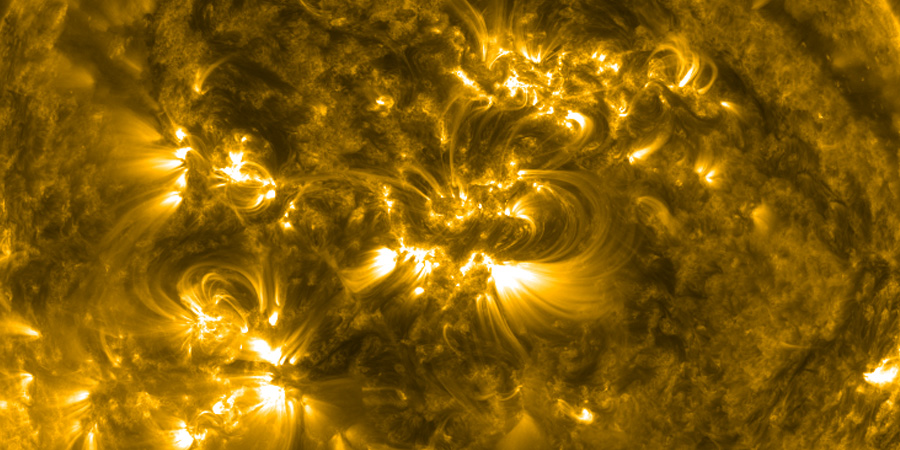
The anticipated coronal mass ejection (CME) impacts did not really materialize as expected with only one true clear impact back on Friday. Are we in residual CME effects? Possibly but geomagnetic conditions are currently a far cry from the expected moderate to strong storm conditions.
CME impact, another M-flare with a halo CME
Freitag, 7 November 2025 11:49 UTC
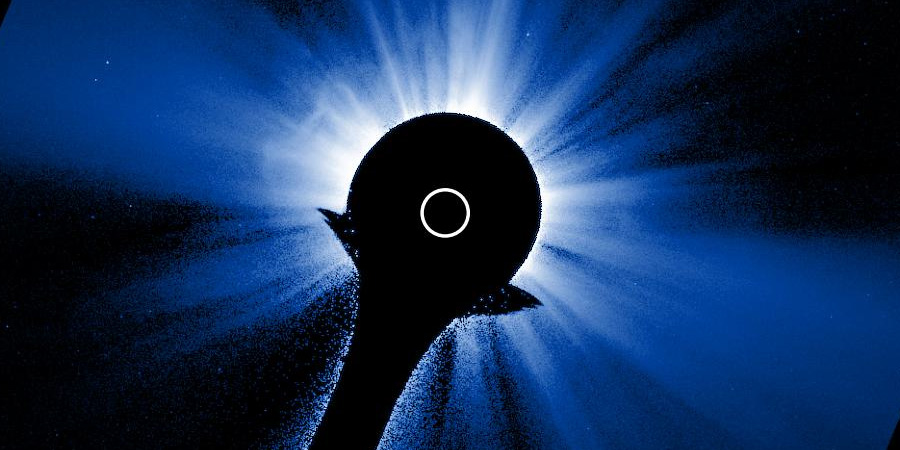
The first of what could now be four possible CME impacts (later more on that) was observed today at the Sun-Earth L1 point at around 04;50 UTC. The total interplanetary magnetic field strength increased to about 17 nT, with the solar wind speed increasing to an impressive 800km/s. The north-south direction of the IMF (Bz) has been mostly northwards but a strong G3 geomagnetic storm watch remains in effect as more CMEs could still arrive at Earth in the coming 72 hours. If this was the first of the four CMEs that might arrive, this will likely be the weakest of them all.
G3 geomagnetic storm watch
Donnerstag, 6 November 2025 19:52 UTC

Camera's ready? The NOAA SWPC has issued a strong G3 geomagnetic storm watch in response to the possibe arrival of up to three coronal mass ejections.
High solar activity and a coronal hole!
Mittwoch, 5 November 2025 16:40 UTC

Quite a lot going on at the moment! Space weather is going from 0 to 100 fast all thanks to not one but two sunspot regions which are producing signficant solar flares. We also have a coronal hole facing our planet. Let's dig deeper in this article.
X1.8 solar flare
Dienstag, 4 November 2025 18:37 UTC
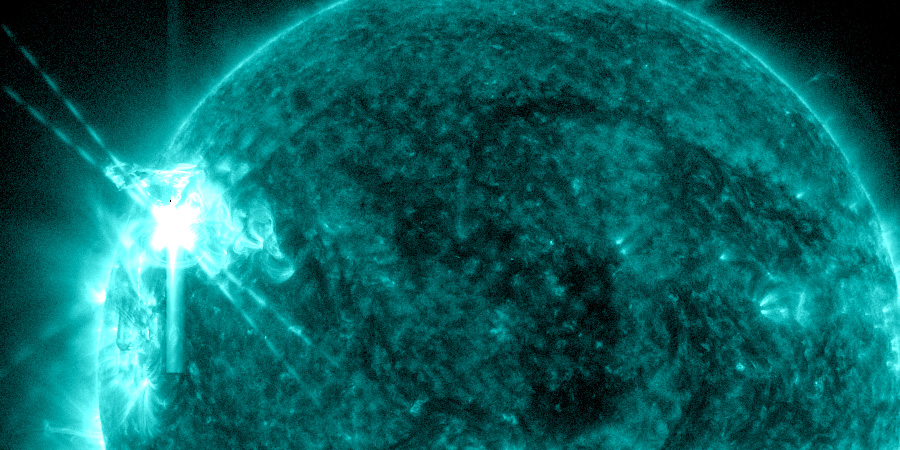
There she blows! Sunspot region 4274 with it's complex Beta-Gamma-Delta magnetic layout delivers on her promise and just produced the very first X-class solar flare since June this year!
Coronal hole faces Earth
Donnerstag, 11 September 2025 18:13 UTC

A coronal hole is facing our planet today which is sending a high speed solar wind stream towards us which could cause enhanced geomagnetic conditions (and thus aurora!) in the days ahead.
Neueste Nachrichten
X1.1 solar flare, G2 watch
G3 geomagnetic storm watch for 4 and 5 June
Coronal hole faces Earth
Neue Nachrichten im Forum
Unterstützen Sie SpaceWeatherLive!
Viele Menschen nutzen SpaceWeatherLive, um die Sonnenaktivität zu verfolgen oder um zu schauen, ob es eine Chance gibt Polarlichter, zu sehen. Mit zunehmendem Datenverkehr steigen jedoch die Kosten für die Serververfügbarkeit. Wenn Ihnen SpaceWeatherLive gefällt und Sie das Projekt unterstützen möchten, können Sie ein Abonnement für eine werbefreie Website abschließen oder eine Spende tätigen. Mit Ihrer Hilfe können wir SpaceWeatherLive online halten!



Weltraumwetter-Fakten
| Letzte Klasse X-Eruption | 04/07/2026 | X1.3 |
| Letzte Klasse M-Eruption | 20/07/2026 | M3.4 |
| Letzter geomagnetischer Sturm | 04/07/2026 | Kp7+ (G3) |
| Tage ohne Flecken | |
|---|---|
| Letzte 365 Tage | 3 Tage |
| 2026 | 3 Tage (1%) |
| Letzter fleckenlose Tag | 24/02/2026 |
| Monatliche mittlere Sonnenfleckenzahl | |
|---|---|
| Juni 2026 | 94.4 -7.1 |
| Juli 2026 | 70.7 -23.7 |
| Letzte 30 Tage | 85.8 -20.7 |