High solar activity and a coronal hole!
Wednesday, 5 November 2025 16:40 UTC

Quite a lot going on at the moment! Space weather is going from 0 to 100 fast all thanks to not one but two sunspot regions which are producing signficant solar flares. We also have a coronal hole facing our planet. Let's dig deeper in this article.
Solar flares
We start with all the solar flares our Sun has been producing today and yesterday. Three solar flares are of interest here. We already reported about the X1.8 solar flare yesterday. This event was quickly followed by yet another X-class solar flare!
This second X-class event was an X1.1 solar flare that peaked at 22:01 UTC yesterday. However, this event fooled quite some people as it is easy to automatically attribute this latest X-class solar flare to sunspot region 4274. But it did not came from sunspot region 4274! This event came from a yet to be seen region behind the south-east limb. So yes, we have two sunspot region out there capable of X-class activity!
Jumping to today, the most significant event today thus far has been a long duration M7.5 solar flare that peaked at 11:18 UTC. Let's take a look what this means for the geomagnetic conditions on Earth. None of these regions are in a prime earth-facing position but could we expect a glancing blow from any of these events?
Coronal mass ejections
Long story short: yes! We take a look at the coronal mass ejection launched during the X1.8 solar flare first. The bulk of the ejecta is heading well north-east as expected but there is a very faint halo outline. It is hard to see but it is there. Do not expect a major impact but a glancing blow is possible either late on Thursday, 6 November or early on Friday, 7 November.
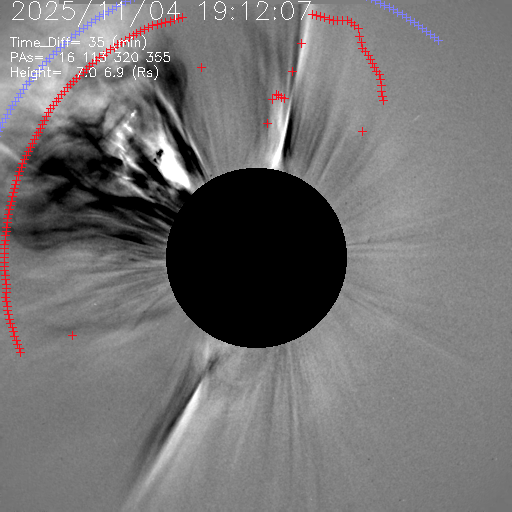
Today's M7.5 solar flare by sunspot region 4274 is also eruptive and the story is pretty much the same for this coronal mass ejection. Another asymatrical full halo coronal mass ejection can be seen leaving the Sun but the halo outline is more well defined compared to the X1.8 coronal mass ejection. We are more confidend on this M7.5 corronal mass ejection arriving at Earth and causing a more significant arrival, likely late on Friday, 7 November.
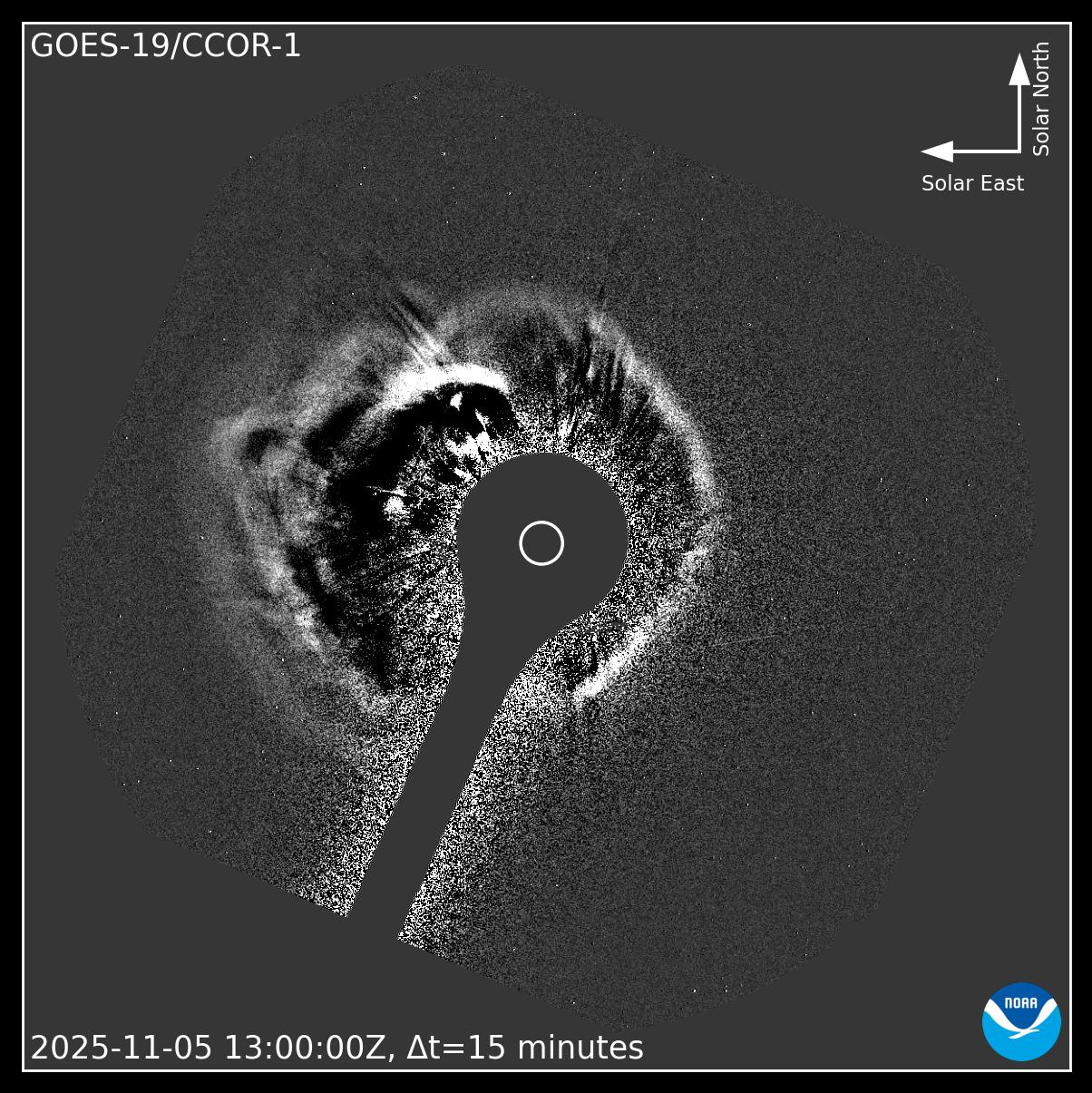
What complicates the situation is that we had a coronal hole facing our planet as well and it is hard to predict how the fast solar wind flowing from this coronal hole influences the two coronal mass ejections.
Coronal hole
This coronal hole faced our planet yesterday and solar wind flowing from it could start to arrive at our planet tomorrow, 6 November. This combined with two possible coronal mass ejection arrivals means we could see periods with geomagnetic storm conditions (minor G1 to moderate G2 conditions) for multiple days starting tomorrow all the way until Saturday, 8 November. Also note that sunspot region 4274 remains capable of strong flaring activity and every minute it is rotating into a more earth-facing position so any future eruptions will have a good chance to also be aimed at Earth. We could be in for multiple days of enhanced solar and geomagnetic activity!
A transequatorial coronal hole is facing Earth. Enhanced solar wind could arrive in ~3 days - Follow live on https://t.co/bsXLidnzGh pic.twitter.com/09yooxv7OU
— SpaceWeatherLive (@_SpaceWeather_) November 4, 2025
Thank you for reading this article! Did you have any trouble with the technical terms used in this article? Our help section is the place to be where you can find in-depth articles, a FAQ and a list with common abbreviations. Still puzzled? Just post on our forum where we will help you the best we can!
Latest news
X1.1 solar flare, G2 watch
G3 geomagnetic storm watch for 4 and 5 June
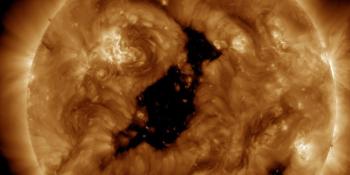
Coronal hole faces Earth
Latest forum messages
Support SpaceWeatherLive.com!
A lot of people come to SpaceWeatherLive to follow the Solar activity or if there is a chance to see the aurora, but with more traffic comes higher costs to keep the servers online. If you like SpaceWeatherLive and want to support the project you can choose a subscription for an ad-free site or consider a donation. With your help we can keep SpaceWeatherLive online!



Space weather facts
| Last X-flare | 2026/07/04 | X1.3 |
| Last M-flare | 2026/07/12 | M1.19 |
| Last geomagnetic storm | 2026/07/04 | Kp7+ (G3) |
| Spotless days | |
|---|---|
| Last 365 days | 3 days |
| 2026 | 3 days (2%) |
| Last spotless day | 2026/02/24 |
| Monthly mean Sunspot Number | |
|---|---|
| June 2026 | 94.4 -7.1 |
| July 2026 | 74.8 -19.6 |
| Last 30 days | 87 -20.2 |