Weak CME passage, coronal hole
Wednesday, 9 November 2016 09:43 UTC

A weak shock passage was detected by DSCOVR around 05:43 UTC this morning. This is likely the filament coronal mass ejection from 5 November that is now passing our planet. As expected by us, it is only a minor glancing blow and geomagnetic storming is not expected at this time. Kp values up to 4 are possible with the current conditions.
Coronal hole faces Earth
Okay so the coronal mass ejection isn't all too much to get excited about as it is now. Good thing we have more news for you today. Indeed, we have yet again a large coronal hole facing our planet. Its the large southern hemisphere polar coronal hole that extends way north up to the solar equator. Our automated coronal hole detection system did its job and notified us this morning:
A coronal hole is facing Earth. Enhanced solar wind could arrive in ~3 days - Follow live on https://t.co/T1Jkf6i4Cb pic.twitter.com/xmejZ29nEU
— SpaceWeatherLive (@_SpaceWeather_) 9 november 2016
During the previous rotation, the solar wind stream from this exact same coronal hole managed to bring us up to minor G1 geomagnetic storm conditions and there is no reason to believe that we couldn't reach the G1 threshold again during this rotation. In fact, during the last rotation this coronal hole solar wind stream came in right behind a strong coronal mass ejection and we only really felt the high speed stream and never saw a co-rotating interactive region at our planet. These CIRs are slower, denser solar wind structures ahead of the high-speed stream with stronger IMF values and often cause a stronger geomagnetic response than the high-speed solar wind stream itself. So yeah, it wouldn't surprise us if we see an even stronger geomagnetic response than last time. Moderate G2 geomagnetic storm conditions are not entirely impossible. We should start to see the effects of this coronal hole solar wind stream at Earth either late on Friday (11 November) or early on Saturday, 12 November.
Thank you for reading this article! Did you have any trouble with the technical terms used in this article? Our help section is the place to be where you can find in-depth articles, a FAQ and a list with common abbreviations. Still puzzled? Just post on our forum where we will help you the best we can!
Latest news

X1.5 solar flare

M2.7 solar flare, CME arrival possible
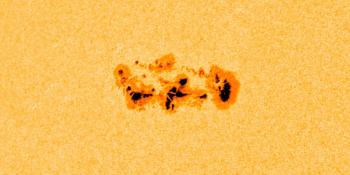
Complex sunspot region 4366
Latest forum messages
Support SpaceWeatherLive.com!
A lot of people come to SpaceWeatherLive to follow the Solar activity or if there is a chance to see the aurora, but with more traffic comes higher costs to keep the servers online. If you like SpaceWeatherLive and want to support the project you can choose a subscription for an ad-free site or consider a donation. With your help we can keep SpaceWeatherLive online!



Space weather facts
| Last X-flare | 2026/04/24 | X2.5 |
| Last M-flare | 2026/05/10 | M5.7 |
| Last geomagnetic storm | 2026/05/05 | Kp5 (G1) |
| Spotless days | |
|---|---|
| Last 365 days | 3 days |
| 2026 | 3 days (2%) |
| Last spotless day | 2026/02/24 |
| Monthly mean Sunspot Number | |
|---|---|
| April 2026 | 79.3 -6.6 |
| May 2026 | 103.1 +23.8 |
| Last 30 days | 95.2 +0.9 |