Coronal hole faces Earth
Saturday, 20 April 2019 18:02 UTC
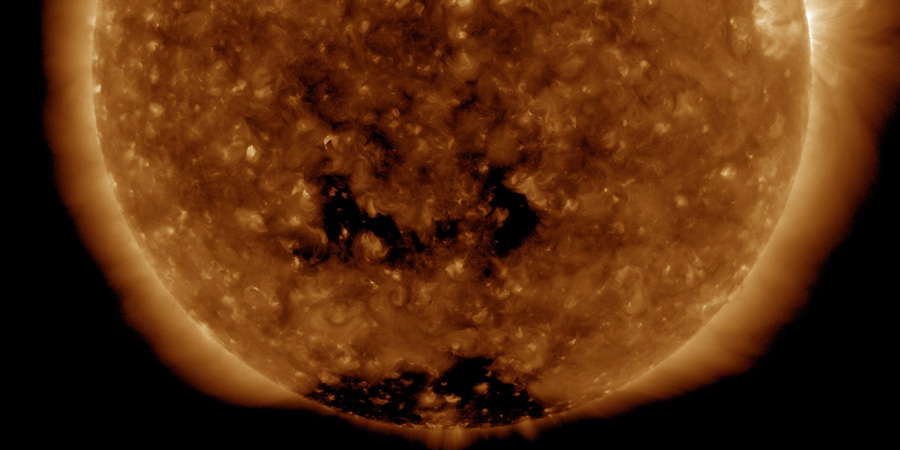
Space weather has been very quiet lately with not much interesting to report on. There haven't been any sunspot regions or solar eruptions worth mentioning and also here on Earth we've been having quiet geomagnetic conditions. This could however change in the near future as we have a southern hemisphere coronal hole facing our planet today. Those of you who follow us on Twitter or have the SpaceWeatherLive iOS/Android app have likely seen the automated coronal hole detection alert.
A southern hemisphere coronal hole is facing Earth. Enhanced solar wind could arrive in ~3 days. Follow live on https://t.co/bsXLidnzGh pic.twitter.com/NslDIERINe
— SpaceWeatherLive (@_SpaceWeather_) April 20, 2019
This is a familiar coronal hole that faced our planet last rotation as well but it did not change much during the past 4 weeks. It perhaps slightly increased in size but nothing to write home about. Solar wind flowing from this coronal hole could arrive at our planet on Tuesday which would be 23 April. We do not expect a lot of geomagnetic unrest from this solar wind stream due to the limited size of this coronal hole but high latitude sky watchers who have dark enough skies should be alert for possible aurora displays but anything beyond Kp3 is unlikely.
Thank you for reading this article! Did you have any trouble with the technical terms used in this article? Our help section is the place to be where you can find in-depth articles, a FAQ and a list with common abbreviations. Still puzzled? Just post on our forum where we will help you the best we can!
Latest news
Coronal hole faces Earth

X1.5 solar flare

M2.7 solar flare, CME arrival possible
Latest forum messages
Support SpaceWeatherLive.com!
A lot of people come to SpaceWeatherLive to follow the Solar activity or if there is a chance to see the aurora, but with more traffic comes higher costs to keep the servers online. If you like SpaceWeatherLive and want to support the project you can choose a subscription for an ad-free site or consider a donation. With your help we can keep SpaceWeatherLive online!



Space weather facts
| Last X-flare | 2026/04/24 | X2.5 |
| Last M-flare | 2026/05/22 | M2.3 |
| Last geomagnetic storm | 2026/05/16 | Kp6- (G2) |
| Spotless days | |
|---|---|
| Last 365 days | 3 days |
| 2026 | 3 days (2%) |
| Last spotless day | 2026/02/24 |
| Monthly mean Sunspot Number | |
|---|---|
| April 2026 | 79.3 -6.6 |
| May 2026 | 87.6 +8.3 |
| Last 30 days | 98.4 +8 |