Coronal mass ejection arrival
Thursday, 10 December 2020 07:21 UTC
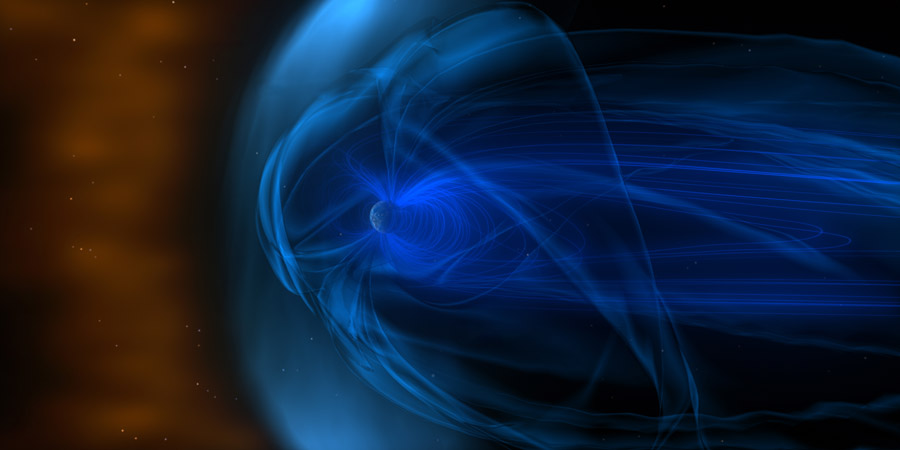
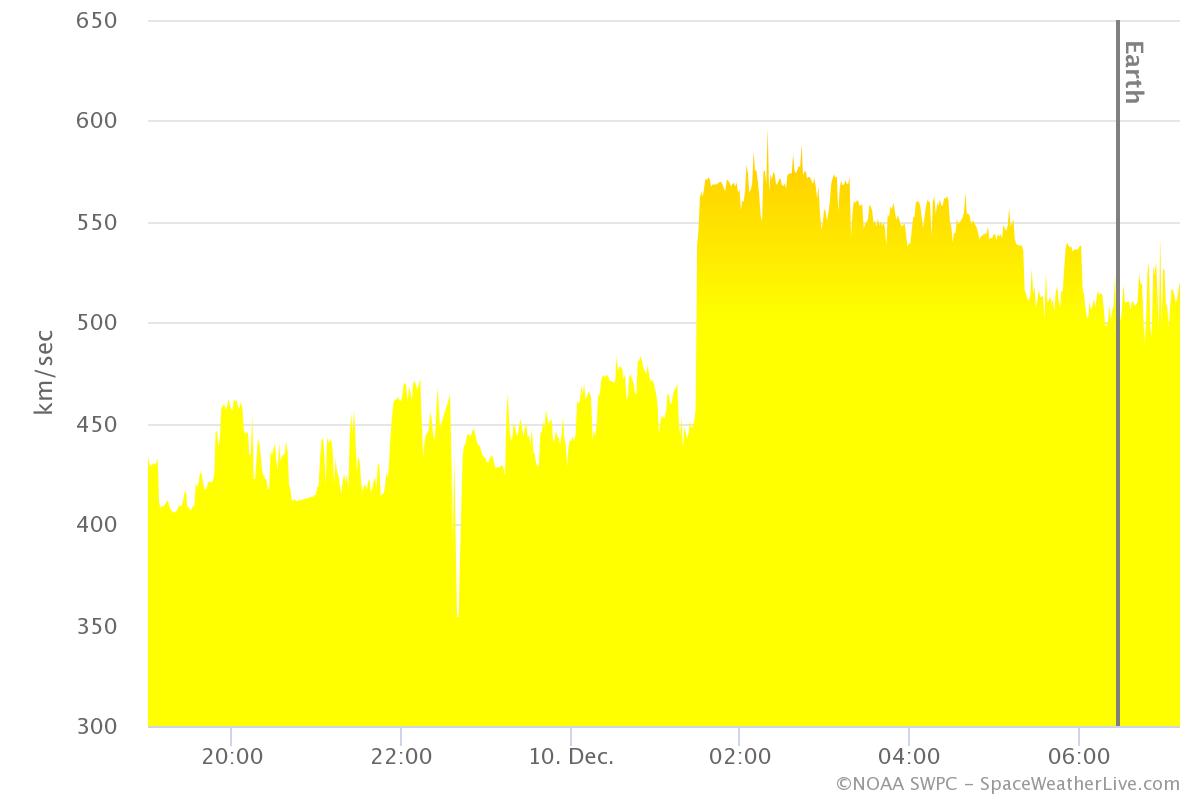
The anticipated coronal mass ejection from a C7.4 solar flare that took place three days ago arrived at the Sun-Earth L1 point around 01:30 UTC this night. This is very close to the predicted impact time. An automated alert was send out by our systems and was posted on Twitter and distributed to many mobile devices as a push notification on the SpaceWeatherLive Android/iOS app.
Minor CME impact - Speed 571km/sec - IMF Bt (strength): 15nT.
— SpaceWeatherLive (@_SpaceWeather_) December 10, 2020
Follow live on https://t.co/5r97j1oSKI pic.twitter.com/hqcP2m0lev
In all honesty we have to conclude that the impact is much weaker than anticipated. We knew the bulk of the coronal mass ejection was heading south of our planet but a stronger impact was expected than what we are seeing right now. The solar wind speed never topped 600km/s where a maximum of 700km/s was expected and the total strength of the interplanetary magnetic field (Bt) only jumped to about 15nT at impact but quickly decreased to a value of 6nT as we are seeing at the time of writing this post. The north-south direction of the interplanetary magnetic field (Bz) has also been pointing mostly northward which is not good for auroral activity at Earth. Right now we only experienced active geomagnetic conditions which stands for a Kp of 4 during the 3-hour period between 00 and 03 UTC. With the current solar wind and IMF data reported by DSCOVR it is hard to see us even reaching minor (G1) geomagnetic storm conditions let alone strong G3 geomagnetic storm conditions. We need to see a radical uptick for that to be the case but the Bz component of the IMF seems to be fairly stable northwards and it could very well stay like this in the hours ahead. Nonetheless this was the first proper arrival of a coronal mass ejection during Solar Cycle 25 and it is good to see our Sun spitting plasma clouds at us again. Let's hope for 10 more exciting years!
Thank you for reading this article! Did you have any trouble with the technical terms used in this article? Our help section is the place to be where you can find in-depth articles, a FAQ and a list with common abbreviations. Still puzzled? Just post on our forum where we will help you the best we can!
Latest news

X1.5 solar flare

M2.7 solar flare, CME arrival possible
Complex sunspot region 4366
Latest forum messages
More topicsSupport SpaceWeatherLive.com!
A lot of people come to SpaceWeatherLive to follow the Solar activity or if there is a chance to see the aurora, but with more traffic comes higher costs to keep the servers online. If you like SpaceWeatherLive and want to support the project you can choose a subscription for an ad-free site or consider a donation. With your help we can keep SpaceWeatherLive online!



Space weather facts
| Last X-flare | 2026/03/30 | X1.5 |
| Last M-flare | 2026/04/09 | M1.0 |
| Last geomagnetic storm | 2026/04/03 | Kp7- (G3) |
| Spotless days | |
|---|---|
| Last 365 days | 3 days |
| 2026 | 3 days (3%) |
| Last spotless day | 2026/02/24 |
| Monthly mean Sunspot Number | |
|---|---|
| March 2026 | 85.9 +7.7 |
| April 2026 | 85.9 -0 |
| Last 30 days | 92.1 +30.2 |