X1.0 solar flare
Monday, 3 October 2022 17:26 UTC
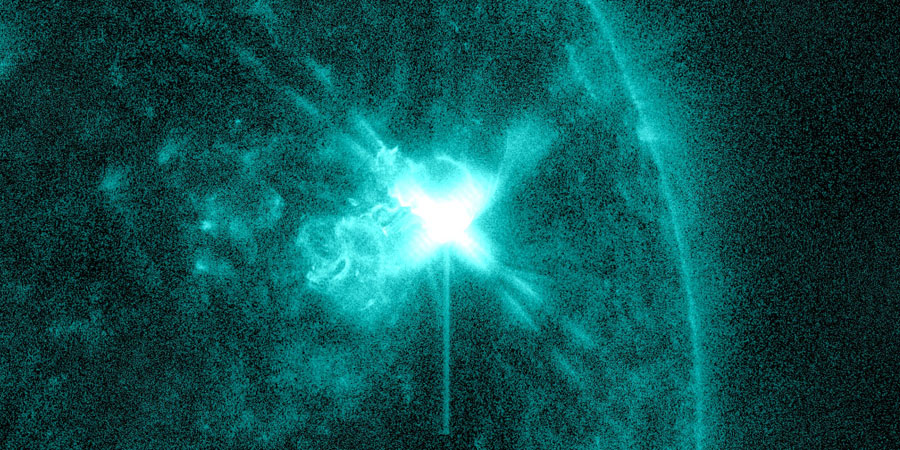
Flares, flares and even more flares! That's the topic of the day! Sunspot regions 3110 and 3112 continue to produce numerous C and M-class solar flares together but an X1.0 solar flare that peaked at 20:25 UTC yesterday from sunspot region 3110 is for sure the highlight of the past 24 hours.
The X-class (R3-strong) solar flare from sunspot region 3110 was associated with M-class activity at the same time in sunspot region 3112. A Type II radio emission was reported following the X1 solar flare indicating the event likely would be eruptive. This was indeed the case as a coronal mass ejection quickly became visible following the solar flare. However, just like the M5 and M8 events earlier from this region, this was yet another narrow eruption where all of the ejecta is not aimed at Earth.

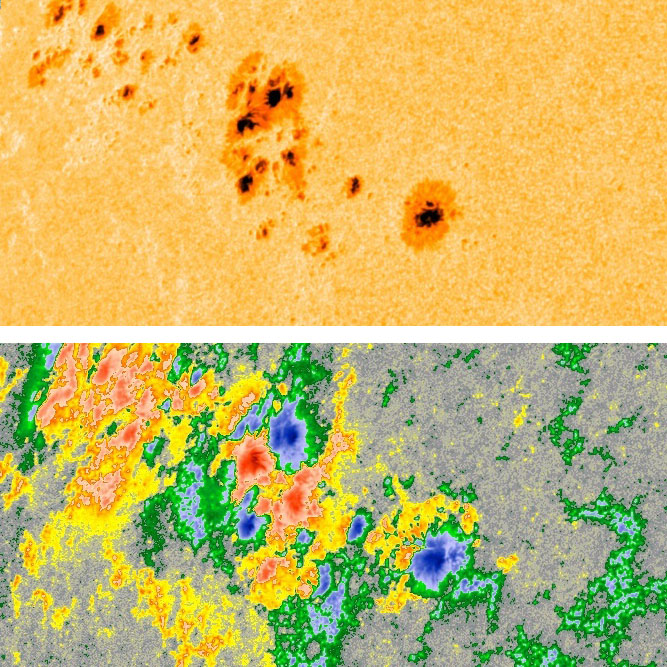
Sunspot region 3110 continues to rotate towards the west limb and any future eruptions will be less and less likely to impact our planet. This means we should start to focus on sunspot region 3112. While it has yet to produce high M-class or X-class solar flares it sure has the potential to do so. It has a complex Beta-Gamma-Delta magnetic layout with numerous significant magnetic delta structures. There is a high chance of further M-class activity from this region and a low-level X-class solar flare is absolutely not impossible either. Our Sun is truly shifting things into a higher gear this October month!
Geomagnetic activity
Here on Earth we are in a slight solar wind disturbance, possibly from a weak coronal mass ejection. The north-south direction of the interplanetary magnetic field (Bz) is however pinned northwards around +10nT which is preventing geomagnetic storm conditions. The solar wind speed is above 500km/s so should the Bz flip southwards we might reach minor storm conditions. Something to keep an eye on if you are a high latitude sky watcher.
Thank you for reading this article! Did you have any trouble with the technical terms used in this article? Our help section is the place to be where you can find in-depth articles, a FAQ and a list with common abbreviations. Still puzzled? Just post on our forum where we will help you the best we can!
Latest news
M8.1 solar flare with earth-directed CME
X1.9 solar flare, Coronal hole faces Earth
X4.0 solar flare
Latest forum messages
Support SpaceWeatherLive.com!
A lot of people come to SpaceWeatherLive to follow the Solar activity or if there is a chance to see the aurora, but with more traffic comes higher costs to keep the servers online. If you like SpaceWeatherLive and want to support the project you can choose a subscription for an ad-free site or consider a donation. With your help we can keep SpaceWeatherLive online!



Space weather facts
| Last X-flare | 2025/12/08 | X1.1 |
| Last M-flare | 2025/12/19 | M1.0 |
| Last geomagnetic storm | 2025/12/12 | Kp5 (G1) |
| Spotless days | |
|---|---|
| Last spotless day | 2022/06/08 |
| Monthly mean Sunspot Number | |
|---|---|
| November 2025 | 91.8 -22.8 |
| December 2025 | 120.8 +29 |
| Last 30 days | 108.7 +19.4 |